יום רביעי, ט׳ תמוז תשפ״וWednesday, June 24, 2026



Follow Us


Rabbi Simcha Feuerman, LCSW-R, DHL maintains a practice in Brooklyn, Queens and Boca Raton, specializing in High Conflict Couples and Families. He writes a daily blog which focuses on Psychological Insights from the Daf Yomi with over 1.5 million lifetime hits, nefesh.org/blogs/SimchaFeuerman. He can be contacted at simchafeuerman@gmail.com.
Read More

If we are talking about the fact that he is afraid of being caught by the law and having to pay, it doesn’t make sense that he would throw it over the fence and cause damage.

The standard peshat of the words “The wise have their eyes in their head” is that they are introspective and consider the consequences of their choices prior to taking action.

A person who constantly succumbs to his needs and urges without any intellectual thought or consideration is no better than an animal.

The ability to collaborate, connect, and negotiate between the built-in masculine and feminine traits and perspectives is what allows creation to occur, literally and figuratively.

Slaughtering with shechita represents an orderly process; while it is still death, it is via the approved process and represents the appropriate connection to G-d and transition from this world to the next through death.

Just because it is a clever derush, does it really make sense that one should merit something as grand as being revived from the dead for eating this final meal?

Since the Torah itself permits substances that may be unkosher if they are nullified or subject to certain assumptions, in effect they become kosher. The same law that prohibits can also permit. However, poison is poison and will not change due to legalisms.
Eating itself is to be viewed as a form of sacrifice. The consumption of food to empower the body to serve G-d can be as symbolically and intentionally powerful as offering a sacrifice on the altar. It depends on the person’s kavana.

The more subtle point is an ego defense known as Reaction Formation. That is when a person is conflicted and feels that he should conform to an internal or external expectation, but deep down, does not want to.
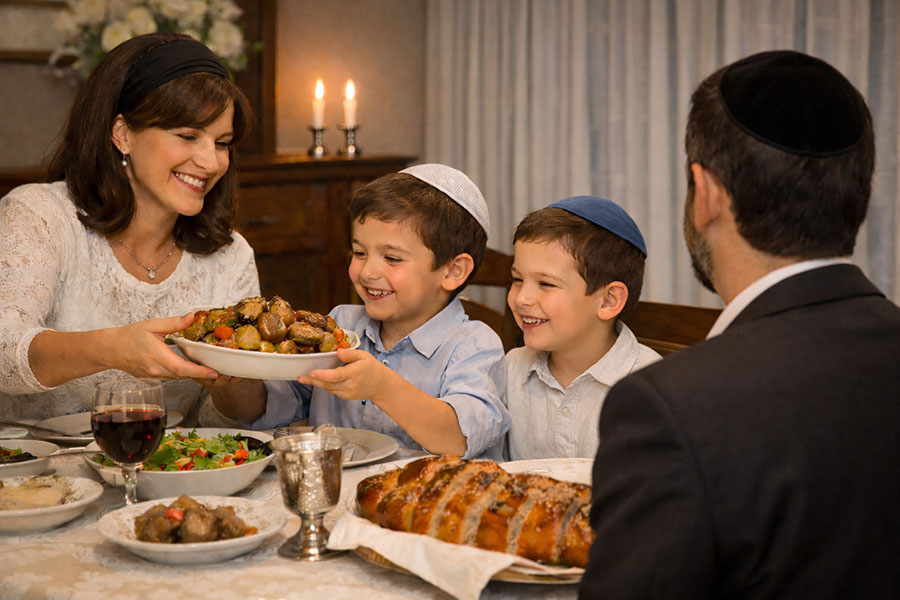
A child only has about 2,000 Shabbos meals until adulthood; when you think about it, that is not a long time to inculcate the fundamentals of our religion and how to experience it.

Anyone who has gone through a traditional yeshiva education is familiar with this unique aspect of Jewish tradition. Torah study is not just for knowledge, nor is it merely a mitzvah to study, but it is also a redemptive, elevating process.

The Rabbis applied an adage to dictate a Torah idea. I believe this is because when the Rabbis discerned an adage that was wise, they realized that it represented a pattern in life.
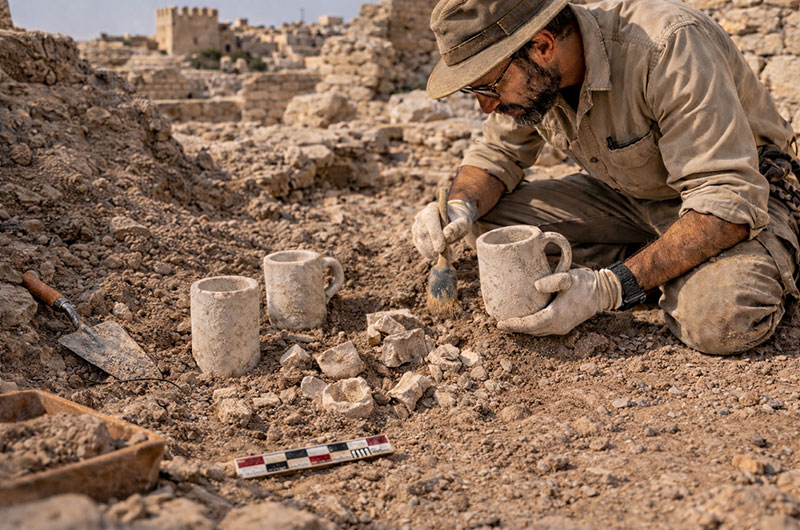
What is most fascinating about the laws of purity is how extensive and invasive they must have been when they were observed properly in the times of our Sages.

Even this can be only a metaphor, because G-d is complete and needs nothing. The words “need” or “it brings honor” are a stand-in for human perception of a deeper truth or force of the universe.

The Torah is asking of us not to devote moments of time toward worship but to live and walk with G-d.
At this point the Gemara assumes that it is improper to commit a sin even in order to achieve a higher purpose, such as fulfillment of the overall mitzvah.
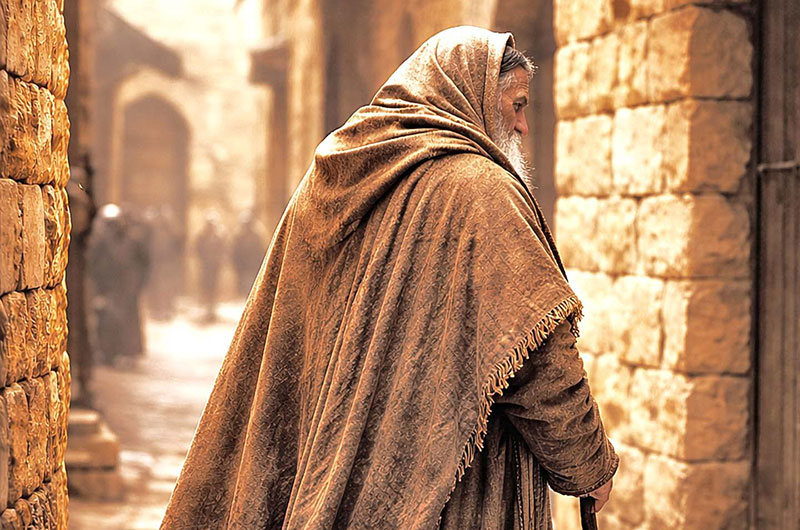
Our forefather Yaakov was described as a wandering Aramean (see Devarim 26:5 pashut p’shat, Ibn Ezra and Rashbam). The Jewish experience is to wander and spread out into the world, like our forefathers did. But the Jew maintains his identity and morals in the outside world by wearing tzitzis.

What does it mean to see G-d’s back? In Hilchos Yesodei HaTorah (1:10), Rambam explains that even when one does not see a person’s face, one can still recognize them by seeing their back, provided one knows them well.
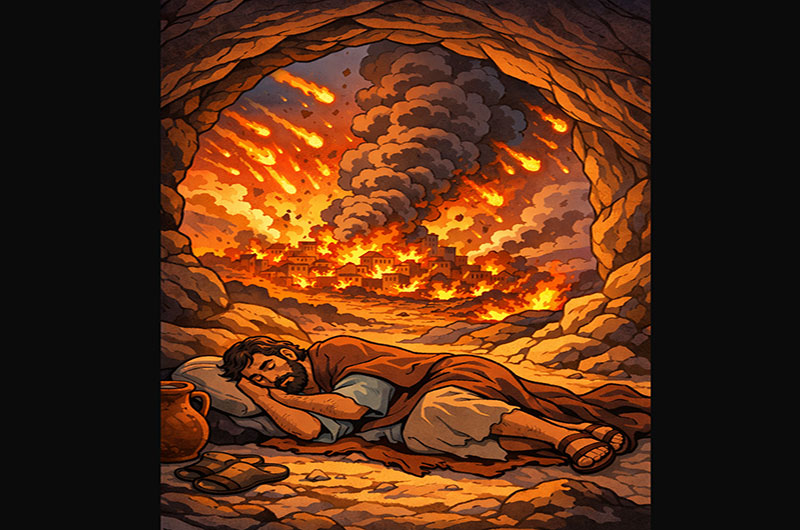
I will add a comparison between the altar and this stone. The altar represented service to G-d. In serving G-d, one goes gradually up and ascends a ramp. There can be no rush-jobs in approaching G-d – at least from our side of the relationship.

Much of our reality is constructed by our personal beliefs. If we believe in forgiveness, we can be forgiving of others as well as ourselves.

Tum’ah, representing death and the vacuum of G-d’s life-force, brings impurity. But humans have free will, and when it comes to our loss of connection to G-d, we must also reach out and cannot receive blanket dispensation.
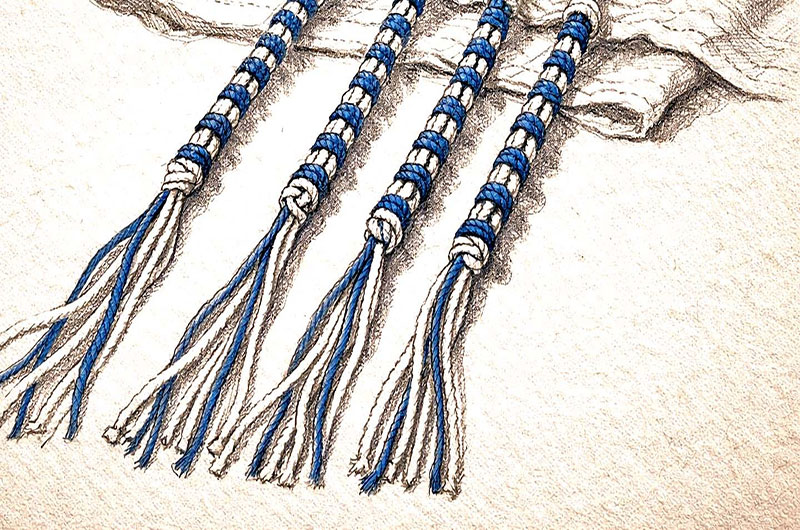
When someone invests in any project, there is a sense of ownership and pride that creates a stronger bond. This is an important principle in chinuch as well, especially in our times where discipline is much less about punishment and more about motivation via “chains of love” (the famous words of the Chazon Ish, Y.D. 2:28).
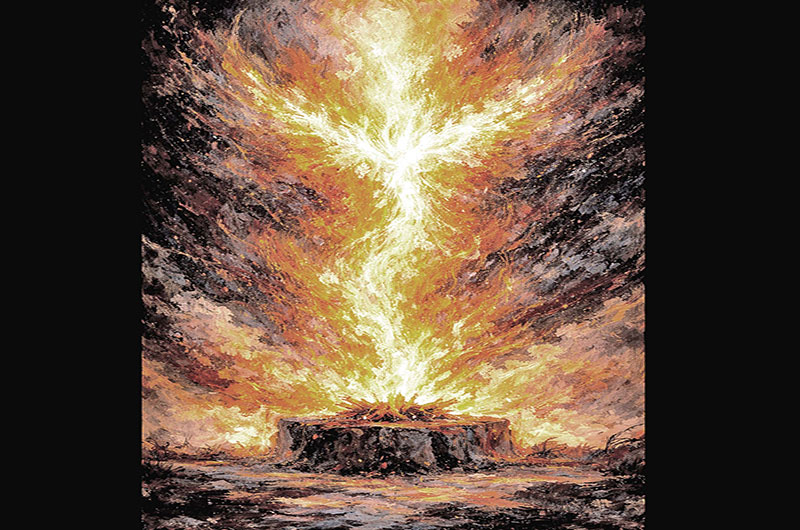
Apparently, the angel miraculously ascended along with the flames, indicating acceptance of Manoach’s offering. This is not a typical encounter with an angel; other Biblical figures encountered angels without such a dramatic departure. What is the meaning of this?
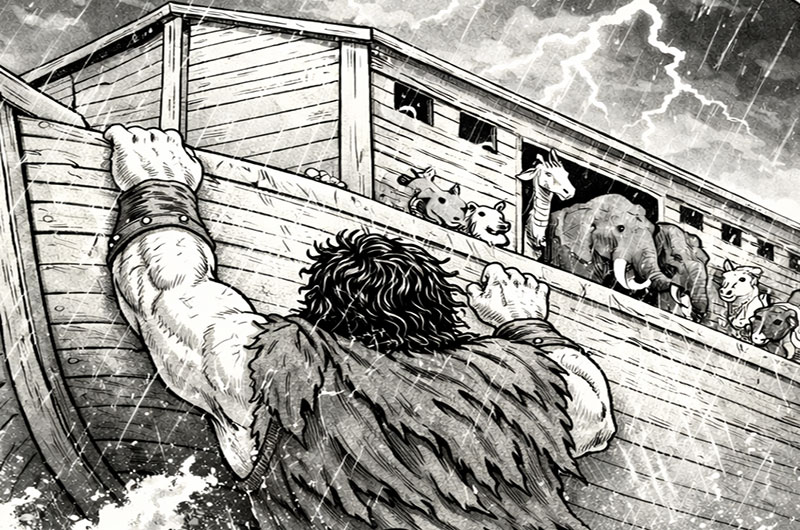
We see that in the end, by hook or by crook, so to speak, Og got his merit. Noach might have sensed this potential via Ruach HaKodesh and wanted to avoid it. By the way, this merit came even though, according to the aggadah, Og had an ulterior motive: He was hoping Avraham would die in battle and he could possess Sarah as a wife.

If a non-kosher substance falls into a pot, it is normally nullified by 60 times a permitted substance. If, at a later time, more non-kosher falls in, the nullification may use the entire mixture as a permitted substance to nullify the new material.

The words offered it up for a burnt offering in place of his son seem redundant: Given the storyline, it is obvious that the ram was being brought as an offering in place of Yitzchak. Why does the Torah emphasize in place of his son?
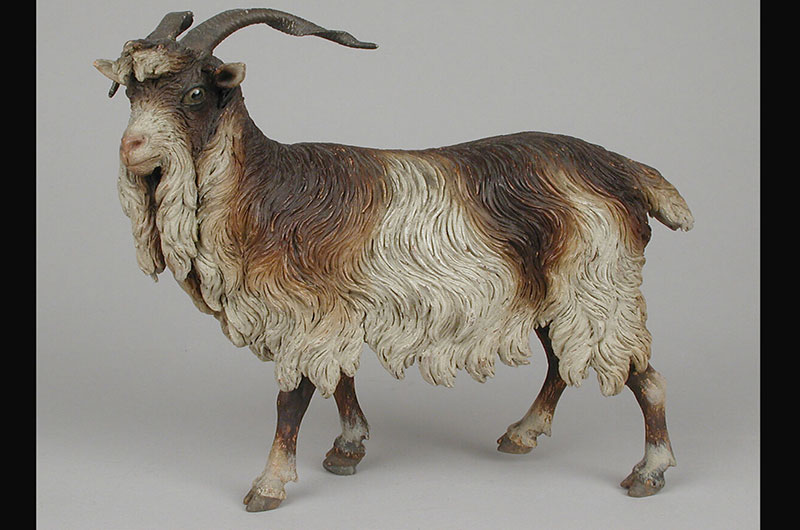
A goat represents impetuousness, as it jumps about and often in the Gemara is a symbol of an animal that breaks boundaries (Sukkah 14b). Holding back from eating the first fruits until a portion is dedicated to G-d represents patience.

We also have another teaching: Any item that is suited to be consumed by the fire (ishim) on the altar shall not descend. A person who attains a position of leadership – a play on the word ishim, which can also connote a prestigious person – may allow some degree of honor and bearing in order to maintain authority, provided he is pure and sincere in his motives.

Each sacrifice’s range of time to consume represents the experience of holiness and influence (hispashtus) that it is supposed to have.
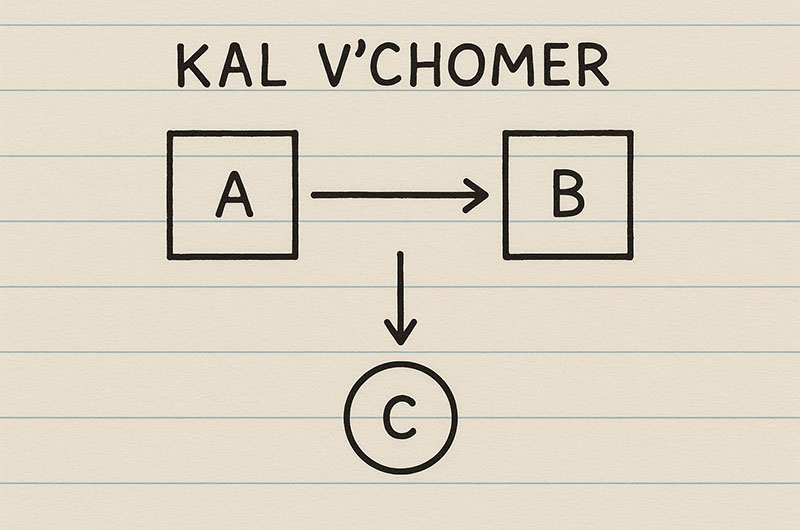
G-d in relation to the world is one giant kal v’chomer. After all, in essence, a kal v’chomer says that if you have the lighter item, surely you have the stronger item.

The ashes represent Yitzchak’s (and Avraham’s) willingness to completely eliminate their egos in service and recognition of G-d. When that level of self-obliteration is accomplished, no physical sacrifice is necessary.
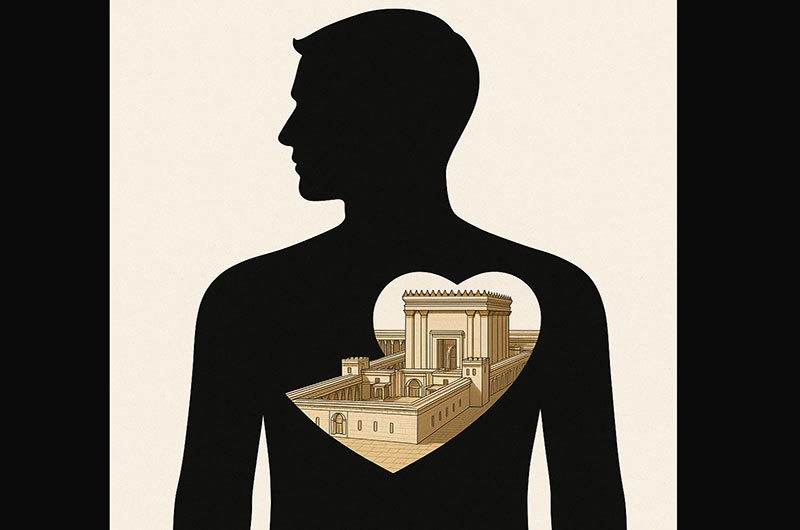
When the verse says about the Mishkan (Shemos 25:9), And so you shall do, and the Gemara (Sanhedrin 16b) infers so you shall do for the generations, it means that we all can create a dwelling place for the Shechinah within ourselves.

Why should tzara’as that spreads over the entire body result in purity? One would think it would indicate the opposite – corruption beyond repair.

As Mishlei (25:2) states, It is the glory of G-d to conceal a matter. A relationship must have privacy and sacred boundaries, honoring the bond both from within and without.

A person who understands that his happiness and success are not dependent on anything material but only on his level of morality and attachment to G-d is truly free.

By way of analogy, in Tefillah Zakkah we recite that our fasting on Yom Kippur, and the consumption of the fats and blood volume from our body during the fast, should be considered as if we offered the fat and blood of a sacrifice on the altar.
Within all of us is this tension. A part of us might find the rituals confining, excessive, and boring. Why must we drudge through organized prayers and rituals? Why can’t we just connect to G-d and be a Jew at heart? The feeling is most legitimate.

Goodman points out the Rambam is clearly hinting at his own suffering from his life – sea-voyage, or service of kings, indeed perhaps even a self-rebuke in the line they complain of the decrees and judgments of G-d. We are left speechless regarding the Rambam’s emotional courage, self-honesty, and humility.

Every person who has leadership status – a governor, a parent, a teacher, or an employer –must consider that even the highest official, the king, is only who he is by virtue of what he does.

Even if the judge tells you that what appears to you to be right is left, or that what appears to you to be left is right, you have to obey him. The question is: How literal is this? Is one to really doubt their own sense data and override it, relying on the Sages?
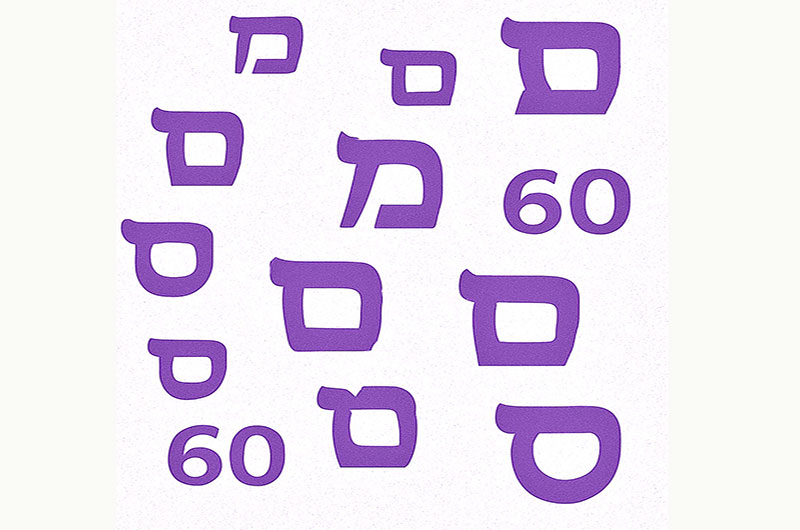
The idea that a prohibited substance is nullified by 60 is portrayed pictographically by a mem (square) surrounded by a samech (circle).

In reality, every color is actually all the colors except that one – because the surface is absorbing all wavelengths except for one, and reflecting that one back to us.

Disenfranchised and prolonged grief often require additional support, as they involve barriers – emotional, social, or both – to normal mourning.

If a person has an optimistic attitude, the cognitive bias will seek reasons to feel better. It is an inescapable factor in human consciousness that the attitude itself shapes the outcome.
Psychologically and sociologically, a conspiracy need not involve maniacal villains plotting world control. It can be an unconscious collusion of interests.
In principle, certain sins indeed leave a mark and are absorbed so deeply that the body must be destroyed. Yet, if the internal actions and repentance reach a level that rationalizations peel away – or at least significantly weaken – the vessel is reformed without actual destruction.

We might think ancient society was cruel to women – and in many ways, the ancient world did not sufficiently protect individual rights – but I can’t think of anything more cruel than the modern conception that a woman should feel obligated to compete in the employment marketplace and jump back into work six weeks or three months after the most profound experience of childbirth.
Though the Shulchan Aruch agrees with the Rambam’s broad prohibition, his final clause might offer some room for an answer. It is permitted to note the beauty of an idolator if the focus of the comment is to praise G-d and not the person.

Like many Israeli leaders, Netanyahu often peppers his speeches with biblical verses, usually used as cultural or historical touchstones rather than as expressions of personal religiosity. Keinon points out that Netanyahu’s use of the Shema prayer is less typical and perhaps indicative of a deeper religious arousal.
In a balanced and nurturing environment, sacrifice enhances rather than detracts from quality of life.

Everything, from quarks to consciousness, emanates from Divine will and intellect.

I believe that the books that are opened on Rosh Hashana and Yom Kippur contain the more permanent decrees and judgments of our fate for the rest of our lives or death, be that as it may.

We see that it is a Torah value to maintain composure, even under the most dire circumstances. When we look at the commentaries, we see different ideas as to why this is so, each reflecting on the human condition. Rashi says that remaining calm rattles and humiliates the enemy.

The conflict between different parts of our mind and the denial of certain thoughts provide a tidy explanation for the contradictory ways in which people behave.

What is this oath that was made at Mount Sinai? We might assume that it is referring to the covenant that the Jewish people made there. While not literally an oath, and certainly not one actually made by each inhabitant of every century, it is somehow considered binding on the entire people and its descendants.
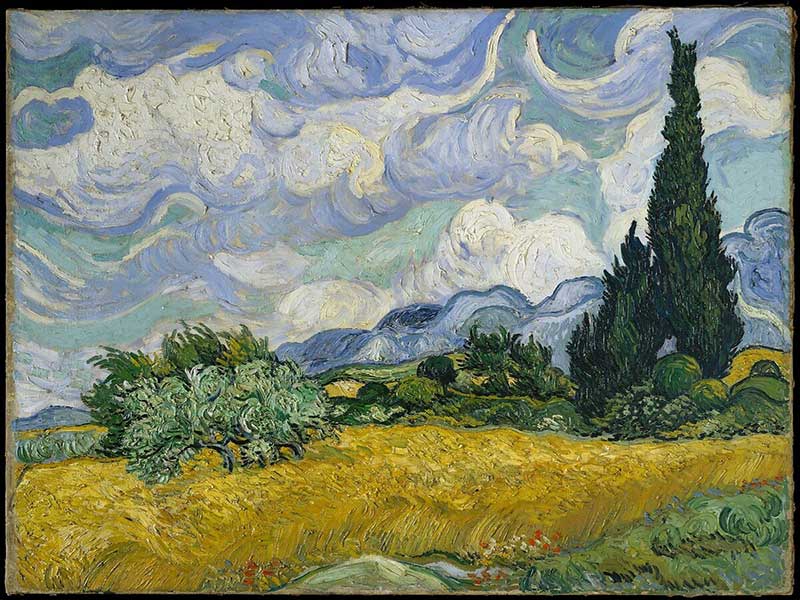
Both Kayin and Hevel are flawed in this narrative. Kayin, consumed by lust and evil, has will and determination. Hevel, free of evil, lacks drive or purpose.

It is an interesting question whether, from the Torah’s perspective, there exists wisdom outside the Torah. Logically speaking, there is no theological need for the Torah to encompass all wisdom, so long as what it commands, as pertinent to us, is wise.
We see that cutting oneself out of overwhelming pain is a basic human response, not a new phenomenon. However, in different eras and cultures, mental illness manifests differently based on perceptions, beliefs, and ego defenses.

There are instances in the Gemara where, though corporal punishment is accepted as a practice, there is a disapproving response when it is done unfairly or excessively...
We see, then, that not all sacrifices are rejected, nor are they rejected from all people.

A person should never bring himself to undergo a test of faith, as David, king of Israel, brought himself to undergo a test of faith and failed.

If one believes in a Divine plan and the natural ups and downs of life, they will feel less anxious and hypersensitive.
One major criticism of the Stanford Marshmallow Experiment is that it presupposes that the child trusts the adult conducting the experiment to actually deliver the promised reward.
The father may indeed be a poor father, and his neglectful behavior may lead the child to reject him, but those reactions should stem solely from the dynamic between father and child, without anyone else inciting the alienation.

Our Gemara on amud aleph continues its discussion of various indirect forms of murder, including the case of one who causes a snake to bite a person. There is a dispute regarding how direct this action is, and according to our Gemara’s analysis, it depends on where the venom is located.

Clearly, the Torah anticipates that the gentiles will be impressed with the Torah’s laws, and they would not be impressed if those laws didn’t reflect common-sense morality and justice.

Clothing serves as a metaphor for how a human is cloaked. Just as clothes cover the body, the body itself is a kind of cloak for the soul.

When fear and panic spiral out of control, even well-intentioned caution can lead to the unjust suppression of legitimate questions and concerns.

As I often remark, the spiritual, physical, and emotional patterns of life are the same, since they are all designed by the same Creator. The image of the smaller flame being drawn to the larger flame reflects the same principle of spiritual excess.

The defiant or symptomatic child may indeed bear responsibility for his or her actions, but deeper questions must be asked: What unhealthy ideas about control, body image, or communication exist within the family?

This raises an important question: When should leaders and authorities confront and rebuke immoral behavior, and when is it wise to remain silent?

Regardless of the interpretation, it is essential to recognize that the relationship between the parents of married children is not akin to the attachment one has with other blood relatives.

Because the person who is betting doesn’t fully commit to losing, and therefore, when the winning bettor collects winnings from the losers, he is essentially stealing their money.

Challenging times do not necessarily stifle spiritual growth or intellectual achievement.

Certain truths can never be fully grasped without exposure to a perspective beyond oneself.
To learn our holy and ancient texts properly, we must beware of idioms that deceptively translate but are not quite the same.
It seems that Rabbi Yitzchak may have approached the disagreement with Rabbi Abba as if it were an abstract halachic debate rather than a personal dispute.
I try to employ true understanding of Biblical Hebrew to decontaminate from subtle incorrect cultural attitudes and beliefs. These mindsets and worldviews are unconsciously incorporated as a result of powerful influences on thought that come from the implicit categorization and depictions in each language.

One question in the poskim arises regarding if the parent left no assets at all. Some argue that since a child is only obligated to honor his parents using their funds and not his own, here he would be exempt.
Our Gemara on amud beis notes that most people who fall ill eventually recover. This observation has legal implications in cases where a person on their deathbed bequeaths their estate to someone else, but later recovers.

This discussion touches on a fundamental question: Are individuals truly self-made, or does familial and social support often play a role in their success?

If we accumulate extraordinary merit, Mashiach will come before the destined time. Without such merit, at the appointed time Hashem will bring events that stir us to repent.
Ever since I first learned this Rashi (in third grade), I’ve been troubled by the apparent illogic of Yaakov’s argument. After all, if Yaakov's claim were valid in the legal sense, then by that reasoning, every firstborn twin should lose his rights to the second-born twin.

Rabbi Yoshiya, who holds that Eretz Yisrael was divided among those who left Egypt, is of the opinion that the Jews merited the land of Israel as a result of the increased suffering in Egypt.
Yismach Moshe explains that Avraham was concerned about his spiritual heir. If he had no son, the man who would carry on his teachings and his philosophy was Eliezer, his servant. While Eliezer was a righteous person and could have done some of the job, no one can carry on the legacy of a father’s teachings as well as a son.
If we compare the words in the blessing of Hagafen (He who creates the fruit of the vine) to Hamotzi (He who takes bread out of the ground), we will notice something odd. He who takes bread out of the ground – really?

When it comes to practical matters, reality is often about consensus.
Beis Hillel's argument seems to be that it is a given that it would be under the category of hurtful speech to denigrate something that another person purchased.
Rashi’s experience is reminiscent of a number of great thinkers and scientists who described their breakthroughs as coming from imaginative visions.
Law helps society, even if certain individuals do not benefit, or even suffer.
I have observed younger people who will not speak English in front of their elderly grandparents. Those gestures and degree of respect are lost on most of us. Kids today are brought up to feel that their teachers are like buddies and friends.

It is notoriously difficult to fully prove or disprove the level of helplessness and depression the person has versus possible laziness and avoidance. Because of this, and the frustration, embarrassment, and confusion, it is difficult for loved ones to respond objectively.
The paradox of unwanted thoughts is that by trying not to think them, we are automatically reinforcing them. Thoughts are electrical impulses in the nervous system.
When one realizes he is sinning, there is a psychological urge to either rationalize the behavior, or deny obligation or connection to G-d.

Throughout history, cultures employed various forms of trial by ordeal in the hopes that either the person subjected to the test would be saved because of their stronger conviction of their innocence, or their guilt would lead to self-sabotage, or their innocence or guilt would be divinely orchestrated at that moment of intense danger or truth.
Before you call me an apikores, no proof is good if it isn’t subject to honest evaluation and criticism.

Many aspects of human nature have changed, and one cannot take pedagogical advice from the Gemara alone, any more than one can decide halacha from the Gemara alone.
Whether a person has self-esteem or is instead narcissistic will impact on his or her ability to embody intellectual humility.

This is the question that Turnus Rufus the wicked asked Rabbi Akiva: If your G-d loves the poor, for what reason does He not support them Himself?

As to why the Sages considered sin with the mouth as a precursor to sexual immorality, on a simple level we may say that lack of boundaries and respect will lead to also breaking barriers of dignity and body integrity.


 June 21, 2026