 July 24, 2026


06.04.2026
יום שבת, י״א אב תשפ״וSaturday, July 25, 2026



Follow Us




By Jessica Russak-Hoffman - JNS

By Jewish News Syndicate (JNS)
Security forces are investigating after a drone came down near the Kiryat Arba residence of National Security Minister Itamar Ben-Gvir. According to Israeli media, the drone was not armed with explosives and was…
Security forces are investigating after a drone came down near the Kiryat Arba residence of National Security Minister Itamar Ben-Gvir. According to Israeli media, the drone was not armed with explosives and was collected by the IDF. Ben-Gvir's office said the minister was updated by security officials during Shabbat. No casualties were reported, and the minister and his family were unharmed.
*Trump halts Iran strikes, says talks are progressing* Trump ordered US forces to stand down from hitting Iran overnight Friday, per Axios, ending a streak of nightly strikes that had run for almost two weeks. The pause…
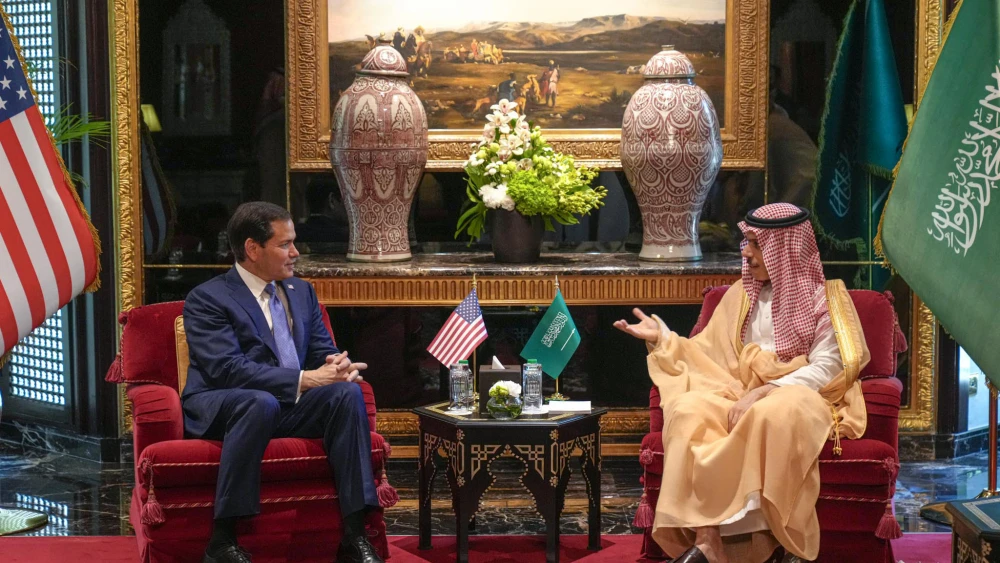
*Trump halts Iran strikes, says talks are progressing* Trump ordered US forces to stand down from hitting Iran overnight Friday, per Axios, ending a streak of nightly strikes that had run for almost two weeks. The pause came even though Israel had reportedly readied a bigger escalation, and despite the fact that Friday's planned US strikes weren't actually larger than the previous nights'. The Pentagon is still drawing up plans for a heavier campaign, but Trump hasn't greenlit one, apparently betting more time will let diplomacy work. He framed negotiating as the wiser path, contrasting it with simply continuing or intensifying the bombing: "There's a military exit where we just keep going just the way we are, and we can even make it a heavier dose, and it's knocking out everything they have. Or there's a smarter strategy, and that's you make a deal." He said Iran is engaging more seriously than ever before but stopped short of predicting success: "I think they're being serious... but that doesn't mean we get there." He also repeated his line that without his return to office, "there would be no Israel, and there probably would be no Middle East." *Trump: Saudi nuclear deal hinges on joining Abraham Accords* Trump again insisted Saudi Arabia must sign onto the Abraham Accords for this week's new US-Saudi nuclear agreement to move forward: "In order to do it, they have to be a member of the Abraham Accords... it's time now that they do it." He predicted normalization with Israel will eventually happen, even as he conceded it's not close; the main sticking point is Israel's refusal to offer a path toward Palestinian statehood, which Riyadh wants. He argued Gulf hesitancy was rooted in fear of Iran, and that it's fading now: "You don't have that problem anymore... the problem is disappearing day by day." Notably, Gulf states have never actually pointed to Iran as their reason for holding off on ties with Israel. The nuclear pact would let US firms supply Saudi Arabia with nuclear energy and reportedly leaves the door open to enrichment on Saudi soil, something nonproliferation experts have flagged as risky, though Trump insists enrichment won't be allowed. A Biden-era version of the deal had actually included Israeli normalization; Trump's doesn't, though he's since said normalization is still a precondition, calling it something the Saudis "understood" all along. Separately, Trump said Netanyahu will visit Washington next week. *Treasury sanctions network tied to Iranian financier Zanjani* The US sanctioned nine companies and four people connected to Babak Zanjani, an Iranian financier, for helping Tehran dodge sanctions. The targets include his "Dot One" conglomerate inside Iran plus Turkish and Emirati firms propping up his already-blacklisted crypto exchanges. Treasury says Zanjani ran funds through a mix of finance, crypto trading, gold and gem dealing, and infrastructure projects to launder money for the regime. State Department spokesman Tommy Pigott said the move holds Zanjani's network accountable for helping Iran "evade sanctions and finance its destabilizing activities, including supporting the Islamic Revolutionary Guard Corps." Treasury Secretary Scott Bessent noted Iran is already suffering economically, with the rial at record lows and inflation surging, and pledged more sanctions targeting regime financiers. Zanjani himself is a billionaire once sentenced to death in Iran for embezzlement (2016), later commuted (2024), who resurfaced backing government economic projects by 2025. Also named: Istanbul's Zedpay, Dubai's Zedx DMCC and BZ Diamond FZCO, and his partner Solmaz Bani. Broadly, Iran's currency keeps hitting new lows, inflation is past 60%, and US strikes have spread across the country. *US and UK planning Hormuz shipping-security summit* Axios reports Washington and London are organizing a conference, likely next week though unscheduled, bringing together defense chiefs from Europe and the Middle East to discuss safeguarding traffic through the Strait of Hormuz. Defense Secretary Pete Hegseth and Joint Chiefs Chairman Dan Caine are expected to attend, as the US and Iran keep exchanging fire over Tehran's interference with the strait, a vital oil chokepoint. *Standoff in the Strait of Hormuz intensifies* Iran's Revolutionary Guards said they turned back four ships over the past day that tried to use what Tehran called an "illegal and unsafe route" through the strait's southern waters, firing warning shots to force them off course. Iran has reportedly been pressuring tankers hugging Oman's coastline, seemingly to push shipping into its own waters and squeeze payment for safe passage. Meanwhile, US forces disabled a tanker trying to slip past the American blockade on Iranian ports. Centcom spokesman Capt. Tim Hawkins said the crew ignored repeated warnings after four attempts to breach the blockade: "The crew was repeatedly warned, didn't comply, and US forces on scene disabled the ship after firing into its engine room... The ship is no longer transiting to Iran." Iran's Fars news agency claimed, via an unnamed source, that a separate US strike hit an LPG tanker believed to be carrying Iranian gas in the Gulf of Oman, killing two crew and crippling the engine room, a claim the US military hasn't addressed. UKMTO separately flagged a tanker's run-in with military forces in the same area, urging ships to stay alert. *Saudi-Houthi fighting escalates into new front* Saudi Arabia and Yemen's Houthis exchanged blows after the rebels announced a blockade of Saudi ports. Riyadh struck Houthi telecom infrastructure and a naval base in Hodeida plus targets on Kamaran Island; coalition spokesman Turki al-Maliki called it a "decisive and strong response" to Houthi threats against Red Sea shipping and said the operation had concluded. The Houthis vowed revenge, blasting the strikes on civilian infrastructure as a "dangerous escalation" that "will not go unanswered," and later claimed missile strikes on Jizan and Yanbu along with hits on Saudi Aramco facilities in both cities, unconfirmed by Riyadh, though video showed smoke over the Jizan refinery. Greek forces operating Saudi air defenses intercepted two ballistic missiles aimed at Yanbu's refineries. A Saudi ship, the NCC MASA, took minor damage in a Red Sea attack but sailed on safely. Yemen's own Saudi-backed air force struck Houthi positions in Marib and al-Jawf, among its first offensive moves since a four-year truce collapsed. Iran's FM Abbas Araghchi called for dialogue instead, saying there's "no military solution" to the Yemen conflict or related regional flashpoints. *Deadly civilian-Palestinian clash reverberates across West Bank* Fallout continued from Friday's gun battle in the village of Tell that killed two Israelis and four Palestinians. It began when roughly 20 Israeli civilians entered the village; a Palestinian grabbed one of their weapons and fired, drawing a rapid-response team whose gunfire left four Palestinians and two Israelis (a soldier and a security-squad member) dead. Village council head Walid Zidan said funerals were held around 1 a.m. with the army limiting attendance to about 30 people; the IDF had detained 51 residents, releasing just six by morning. Nablus governor Ghassan Daghlas joined the funeral procession, which his office said drew large crowds from Tell and across the region. Overnight raids followed: troops swept through Tubas and the al-Far'a refugee camp for roughly three hours without arrests, and searched homes across Tell, including those of the dead men's families, with more than 20 people reportedly detained. Further operations hit Nablus, Jenin, Qalqilya and Tulkarem; the army offered only that it was working "to thwart terrorism." The IDF later reported over 70 wanted Palestinians detained army-wide overnight, with hundreds more questioned: 11 held in Tell, several Hamas-linked suspects caught in Jenin amid a 300-site sweep, 15 detained in Ramallah, one Duvdevan Unit arrest in Tulkarem of a suspect allegedly plotting an attack, and 16 more detentions in the southern West Bank including alleged arms dealers. Separately, Israeli civilians opened fire on cars in Abu Njeim near Bethlehem, blocked the main road, and seized and trashed a vehicle before leaving; no injuries were reported. A military official warned of a revenge mood building among civilians after Friday's clash. Overnight, civilians reportedly threw up four new illegal outposts in the north, one right beside Tell, others near Awarta, Qusra and Jabal Ubayd, while roughly 20 civilians staged another unauthorized "hike" into Tell, though this one passed without incident. Netanyahu and Defense Minister Israel Katz responded by announcing expanded West Bank operations targeting villages seen as "terror hotbeds," aimed at seizing weapons. The Palestinian Authority condemned the violence, with Abbas's office denouncing "Israeli colonists' terrorism" against residents and property in Urif, Surra, Imatin, Far'ata, Umriha and Masafer Yatta. *Separate clash near Susya wounds Israeli* In the southern West Bank's Susya area, a Palestinian grabbed a gun during a confrontation at a farm and fired it into the air; no one was hurt by the shots, but the Israeli man was hit in the head with a rock and hospitalized in moderate condition. The IDF said both sides threw stones during the fight. Troops set up roadblocks and hunted for the Palestinian; the weapon, belonging to an off-duty soldier, was later recovered, though the suspect remained at large. *Gaza strikes reportedly kill Hamas police chief, others* An Israeli strike reportedly killed Abdel-Nasser Al-Maqadma, the Hamas-run police chief for northern Gaza known as its "governor," in Gaza City's Sheikh Radwan area. Separate strikes reportedly killed a medic in the Nuseirat refugee camp and a police officer previously wounded in an earlier strike, while another strike in Khan Younis reportedly killed high schooler Khaled Al-Breim; relatives said he'd just finished school and was killed bringing sweets to celebrate with family. The IDF hasn't commented on any of the incidents. *Elsewhere in the region* UN chief António Guterres made the first visit by a UN Secretary-General to Syria since before its 2011 civil war, telling Damascus "the UN stands with Syria at this pivotal moment" and urging global support following Assad's 2024 ouster. He also called the situation around the Golan Heights "totally unacceptable," as Syria's FM Asaad al-Shaibani demanded Israel withdraw "immediately and unconditionally" from the buffer zone it entered in 2024. Separately, Iraqi air defenses shot down a drone near the US consulate in Erbil.
A rare direct military operation by Gulf states against Iran reportedly took place earlier this month, with The Wall Street Journal reporting that Bahrain and Kuwait secretly carried out airstrikes on Iranian drone and…
A rare direct military operation by Gulf states against Iran reportedly took place earlier this month, with The Wall Street Journal reporting that Bahrain and Kuwait secretly carried out airstrikes on Iranian drone and missile storage sites. The report adds that the United Arab Emirates supported the operation by providing intelligence and assisting with defensive measures.
The U.S. Embassy in Jerusalem has issued a security alert urging Americans in Israel to exercise caution and heightened vigilance, saying the security environment remains complex with the potential for unforeseen…
The U.S. Embassy in Jerusalem has issued a security alert urging Americans in Israel to exercise caution and heightened vigilance, saying the security environment remains complex with the potential for unforeseen escalation. Americans should be prepared for flight cancellations, periodic airspace closures and travel disruptions, the embassy said, noting that some airlines in the region have postponed the resumption of earlier schedules and others have cancelled routes. Travelers were advised to check departure status directly with their airline or through the Israel Airports Authority flight boards. Americans outside the Middle East should reconsider travel to and through the region, the embassy said. U.S. diplomatic facilities, including outside the Middle East, have been targeted, according to the alert, which said Iran and groups supportive of Iran may target other U.S. interests overseas, including businesses and institutions. The State Department authorized the departure of non-emergency U.S. government personnel and family members from Mission Israel on February 27. The consular sections at the Jerusalem embassy and the Tel Aviv branch office remain open for routine and emergency services. The embassy advised Americans to know the location of their nearest shelter or protected space and to download the IDF Home Front Command application to receive real-time alerts. It also advised keeping a supply of food, water and medications, avoiding demonstrations, large gatherings and areas with a heavy police presence, monitoring local media, following the instructions of local authorities, exercising caution at locations publicly associated with the United States, and keeping a low profile. The embassy listed emergency contacts as 100 for Israel Police and 101 for ambulance service, JerusalemACS@state.gov and TelAvivACS@state.gov for consular assistance, and the State Department Consular Affairs Call Center at 1-888-407-4747 from the United States and Canada or +1-202-501-4444 from abroad.
By Rabbi Reuven Taragin
By Devorah Malka Cenker
By Dr. Chaim Botwinick
By Raphael Grunfeld
By Jewish Press Staff