יום שני, כ״א תמוז תשפ״וMonday, July 6, 2026



Follow Us


Dr. Chani Miller is an optometrist and writer who lives in Highland Park, N.J., with her family. She is a frequent contributor to The Jewish Press.
Read More
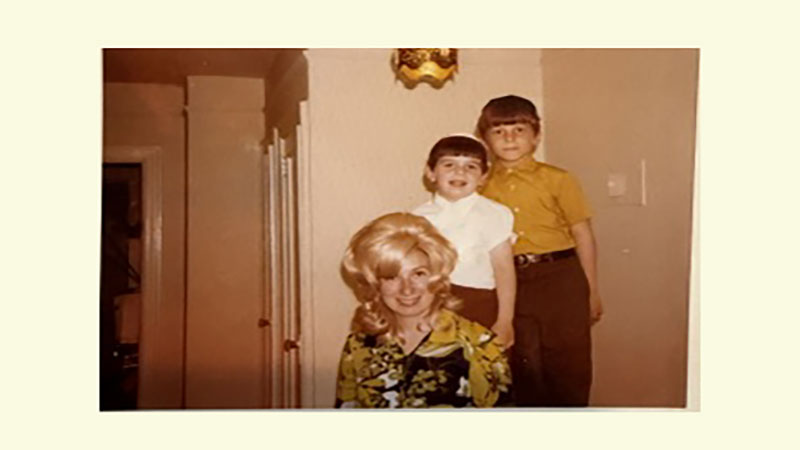
There is a unique grief that belongs to an in-law child. It sits quietly in the back seat, in the shadows; it knows its place.

Intellectually I know that tznius is a middah, an outlook, a shield that guards our inner selves from becoming diluted, but invariably, one of the first images that pops into my mind when I hear the word tznius is that young teenage girl on her first day of school.

Throughout the narrative, Horowitz points out examples such as this, where things in her life could have been so much worse, and woven throughout the entire sefer is evidence of the incredible gratitude she has to Hashem for the many gifts she has received that help her navigate through a world without sound.

As slaves to Pharaoh, our time was not our own. The gift of freedom also granted us the gift of time, and our very first commandment shapes that gift by giving us the Jewish calendar, a framework for our days.
I shelved it for future perusal, knowing that when the time was right, it would call to me, and a few weeks later that call came in the form of an email with the word prompt “Rav.”
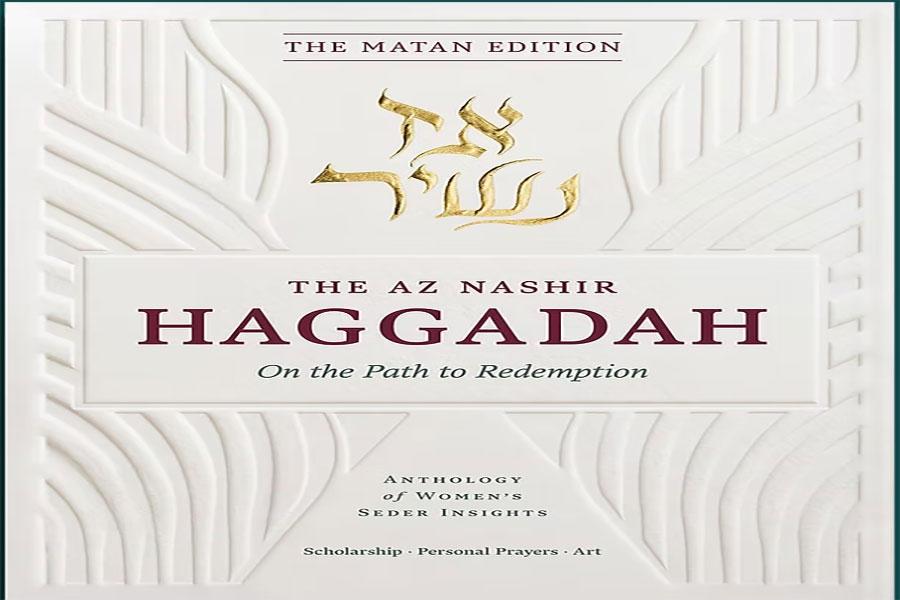
Sheps comments at the beginning of the Haggadah that we are all teachers on Seder night and we are all students.
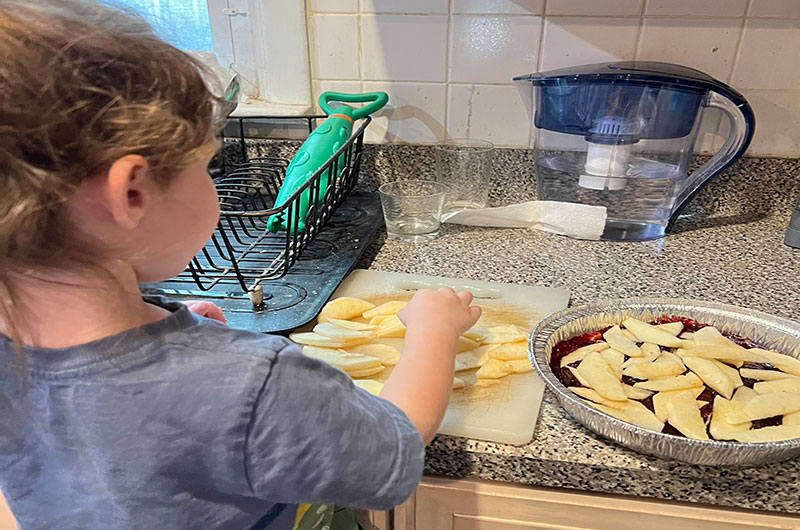
Now that our grandson is three, it’s easier – not totally possible, but easier – to imagine him as the beneficiary of our legacy. Often, though, it is impossible to imagine myself as the guardian of a legacy since I am still processing the legacy that has been left to me.
Shortly after my daughter got married, both she and my mother came for the weekend. As we lit candles, I realized that this was the first time that three generations were simultaneously ushering in Shabbos.
One of the overarching themes in Sefer Bereishis is sibling rivalry. The outcome of each successive conflict propels the narrative forward, shaping our destiny through events that are sometimes confusing and surprising – especially since the reason why the Torah doesn’t begin with mitzvos and laws is so that we can learn from the actions of our forefathers.
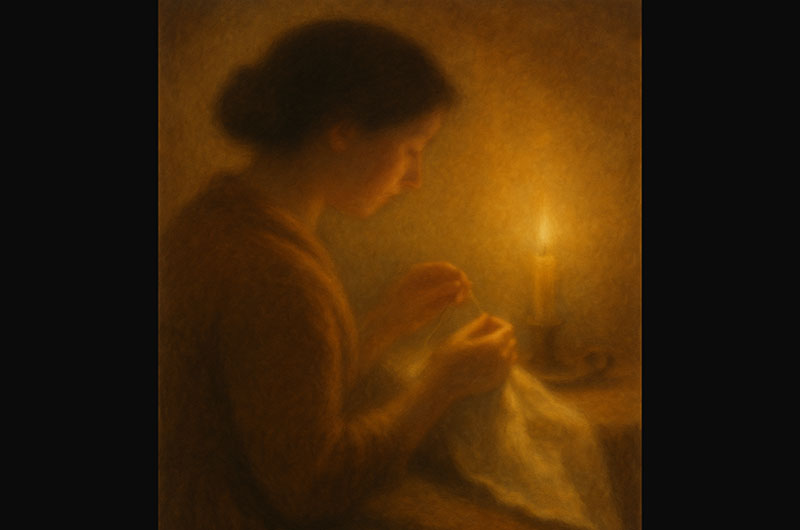
We realize, too, when we are davening on Rosh Hashana that we have no idea how to articulate our wants and needs. What if you need a car? How does one phrase such a mundane request to Hashem? Like Elkanah, we can’t say nothing, but if we do say something, what should it be?
The word shehakol conjures happy memories of the first bracha under the chuppah, ‘shehakol bara l’chvodo’ – everything Hashem created is for His glory and honor.
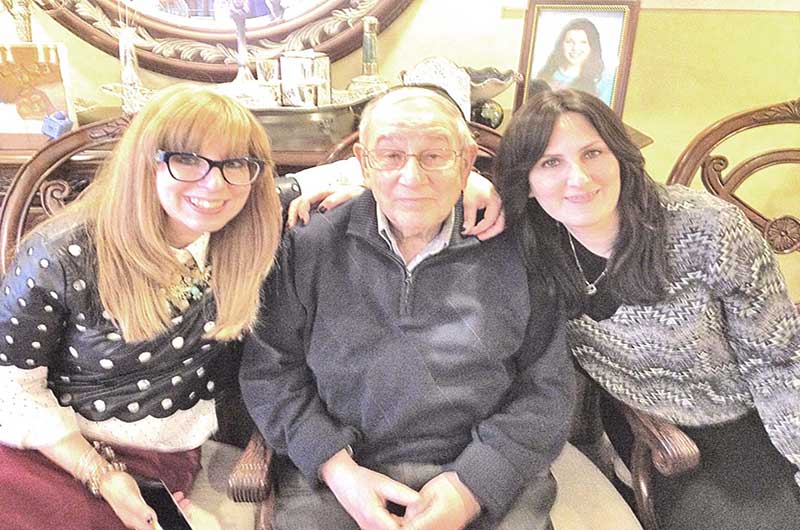
As the weeks went on, it became disappointingly apparent to me that my father and I were not inspired by the same things. I desperately wanted to connect to the ideas that he thought worthy of preservation, and while I was able to appreciate them intellectually, my heart remained perversely neutral.
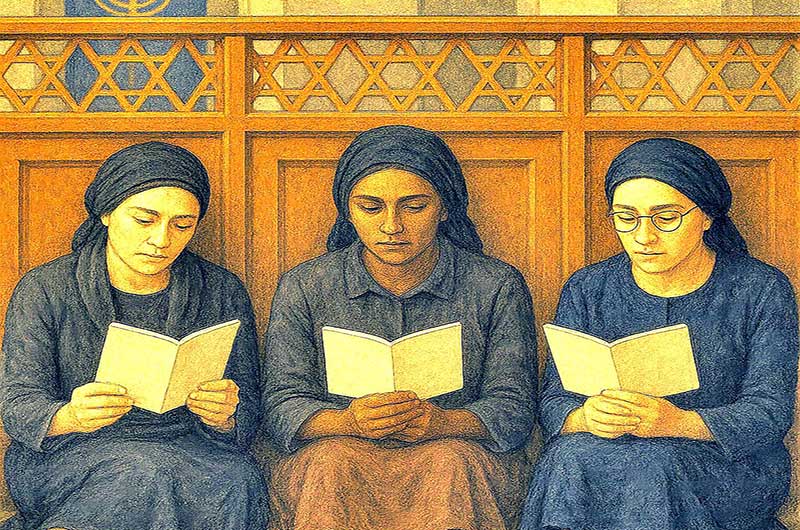
My parents were very makpid about the Three Weeks, particularly my father. He did not allow us to go on any unnecessary outings starting from Shiva Asar B’Tammuz, and even once we were grown and out of the house, he would keep tabs on all of us, reminding us that the period of Bein HaMitzorim was a dangerous time.
In about thirty seconds, I had reconfigured our life. We would settle by the sea, my husband would become a Masada guide, and I would homeschool at the water’s edge.
I tried not to cry; I did not feel that I had earned the right to do so.

This orange sky was no metaphor created by an aching heart, nor was it just flowery words on a page, this was real and true and terrifying, in the most wonderful way possible.
About a week later when my melt Google doc remained blank and silent, I realized that my word was actually too good. Although theoretically I had many options, all of them fell flat when I tried to write them down.
A sukkah is a symbol of G-d’s protection in the wilderness and the ability to bring Hashem with you everywhere.
Casually, he leaned over in his high chair, locked eyes with my mother and said, Hi. It was the tiniest of moments, over in a blink, one I would have missed had I continued to obsess about the food situation.

I heard everything he said, but I can’t remember anything he said. I remember that he cried, but also that he laughed. He wore his emotions like a second skin, and despite his difficult life his default setting was happiness.
Her penchant for collecting runs in the family; my personal weaknesses are books and yarn. The word hoarder has been mumbled in my presence, but I like to refer to myself as a curator.
It is a day when being part of the klal will supersede being an individual; it is a day of contradictions, an awkward fusion of happy birthday wishes and the start of the saddest time period of the year.
According to my father’s rebbe, Rav Joseph B. Soloveitchik, koach and gevurah are not the same entity at all. Koach means physical strength, while gevurah means heroism or inner strength, a specific form of self-control.
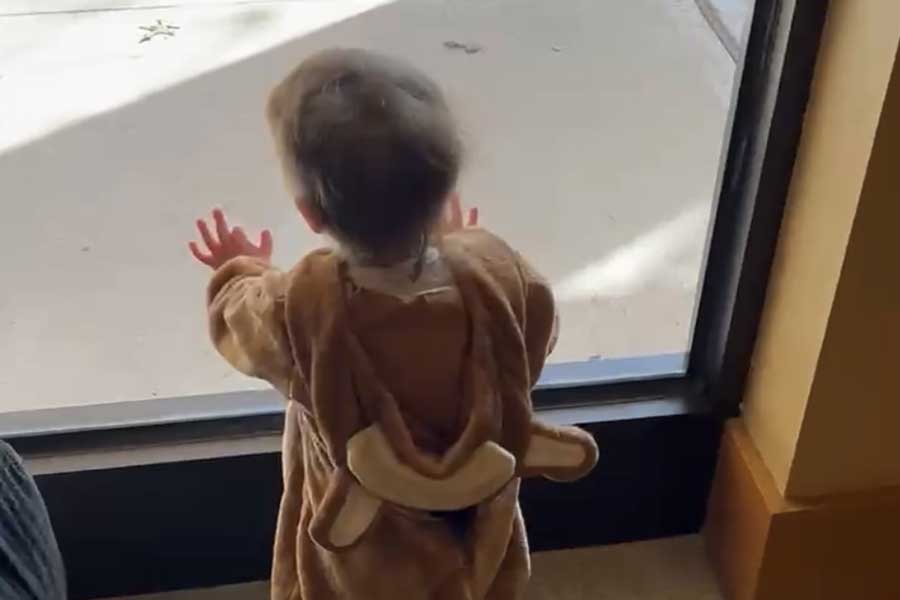
These teeny tiny moments add up, and while he may not know what Havdalah means, there is a feeling associated with the mysterious colorful candle that magically appears once a week and bursts into flame, a feeling that will settle into the part of his heart that requires no words, a feeling so primal, that years later he won’t even understand why he loves Havdalah so much.
In Parshas Ki Sisa, after Hashem told Moshe to collect half a shekel from the men, He had to show Moshe a fiery image of this coin so that Moshe could comprehend the commandment.
My ennui worsened after October 7. At the time we were learning Koheles, and all I could think about over and over and over again was that indeed everything was futile, everything was hevel, everything was nothing.
Other topics discussed in this section are bat mitzvahs, women and prayer, Jewish divorce, and Torah education for women.
In order to understand the origin of this unique menorah, it’s essential to understand its artist.

Once again it is shocking to me that while we hold our collective breath and pray for the hostages and our soldiers and ourselves, daily life and all its messiness still swirls around us.
Eventually the towels weren’t needed anymore, and although the chairs are twenty years old, they mostly remained stain free and we were spared the sticky indignity of the old school plastic covers.
One day you realize that it is quite possible that your grown children are wiser and kinder and more resilient than you are.

I started the journaling project with the anticipation that it would bring focus and accountability to the month of Elul. I didn't anticipate, however, that my definition of teshuva would change.
Hashem transcends time, existing in the past, present and future simultaneously. If we ask Hashem to judge us based solely on our existence in this frozen moment, we would fail miserably.
I experienced the tiniest foreshadowing of my daughter's motherly instincts when that baby bird fell out of the tree so many years ago.
Can we teach AI to knit? Absolutely. But why would we want to? Why would I forfeit the pleasure of scouring the internet for a new and challenging pattern and then hunting for the perfect yarn and buttons to go with it?
On Shavuos night, look up at the sky. Tilt your head a little and lower your eyelids to half-mast; if you are a seeker of the divine or a hunter of truth, the shadow of the mountain slowly materializes, piercing its way through the inky veil of night.
This concept of tznius as a middah versus tznius being solely a mathematical equation involving multiple body parts is a unifying theme that is woven throughout many of the personal essays.
I’m sure at the beginning it was about being frugal, about coming to America with nothing and painstakingly creating something; it was about scrimping pennies so you could buy the basics that we take for granted, like milk, like fresh eggs, like a tea bag.
Certainly he can never match his oldest brother's brilliance, and although sometimes he thinks that his second brother makes some good points, he is afraid of disappointing his parents; he is afraid of disappointing himself.
Nestled in the brushed velvet was a chevron shaped gold necklace; a style that was very popular for a very hot second.
One of the best things about Shabbos is that you live inside your head. One of the hardest things about Shabbos is that you live inside your head.
Our yeshivas nowadays, especially those in town, are cubbyholes. If you don’t fit into the cubby, you can’t go to that yeshiva.
Waxy is a peculiar word which can also mean flexible and yielding; an elusive but desirable character trait whose development has allowed me to grudgingly accept that it’s okay that I don’t have the potato kugel gene.
In the month leading up to our anniversary, we had two family weddings, one from each side. It was inevitable at each simcha to note the leaves that had fallen off the family trees, the gaps in the branches.
Each one of us relates to the text in a way that is unique from one to another as well as being unique and singular to our new selves; we are not the same as we were last year, last month, or even two hours ago.
On one of our myriad trips to Target I spotted a t-shirt with the words “Who are these kids and why are they calling me mom?” I laughed so hard I cried; my girls looked at me like I was nuts, and I think my oldest daughter was a little insulted at my reaction.
Awesome! my inner Baid Yaakov girl enthused, it’s good someone reminded you to start saying it. And who knows? Hashem can make anything happen, right?
To paraphrase, bird offerings and niddah are the main course; and the sciences are the spices, the flavoring – nice, but not necessary.
I wonder if the press stopped listening to Prasad’s presentation after the grandma video because, quite frankly, the technology that he discussed for Alexa later in his speech certainly gave me the creeps.
What happens when memory fails; when time or miscreant genes insidiously steal the basic tenets of selfhood? Who am I, who are you, who are we, without our memories, without our past?
It is important, though, to remember that the Torah is not a storybook. We are not privy to what happened later in the day when Aharon returned home without two of his sons, when his heart thawed and the shock wore off.
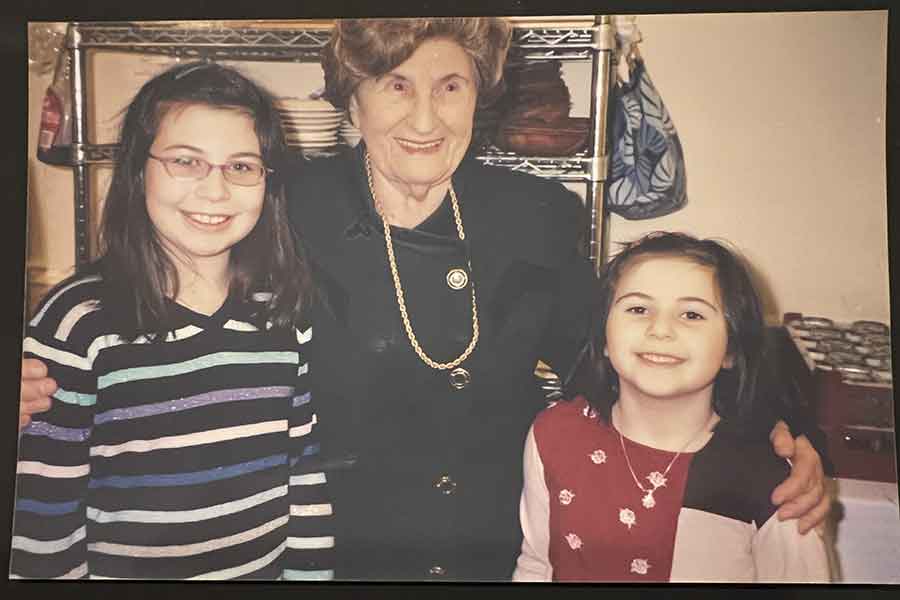
No longer the simple sidekick to a cup of coffee, its magical spell transports you back into Bubby’s loving embrace, back to a time when you were the center of the universe, a princess, a diamond, sheer perfection in a tiny human form.
Every generation thinks it is special – more advanced, more prescient, more enlightened. We think it's cute to make fun of millennials and blame climate change on boomers.
These tiny daily interactions are the glue that holds our society together. Good morning. Thank you… In our five minute interaction we have reiterated what it means to be human.

I was determined to reclaim my lost hour, to wrestle with time and beat it into submission
No one can unfurl a story better or make me laugh more than someone who has had the life experience to know that nothing bad lasts forever.
Assuming both parties have normal social skills and neither one has pulled out a weapon, etiquette would dictate that when first meeting, at the very least some inane pleasantries would ensue and not an immediate bar brawl.
Even the most literal mind would be hard pressed not to see the unequivocal connection between my grandfather and the willows that he had planted.
Of course I want to do teshuvah. Of course I want the road back to Hashem to be smooth and unblemished, easy to traverse. But it’s difficult. And messy.
Maybe it was because I grew up without the Internet and had only books, seven channels on TV, and siblings for company, that I was able to enjoy the simple pleasure of peeking through these multitudes of diverse windows.
Dear Julia, Congratulations – your salacious Netflix show “My Unorthodox Life” has successfully prompted countless Orthodox Jewish women to examine their Orthodox Jewish lives and to unequivocally recommit themselves to their G-d and to their frum lifestyles. I find it deliciously ironic that your show dropped during the Nine Days. In a time period when […]
This was not my office where we controlled who came in and out and everyone was masked. This was the wild West, uncharted territory.
One thing that 2020 and the Covid-19 experience has made clear to me is that I am not in charge.
We don’t get to decide what constitutes a chillul Hashem – it gets decided for us.
Some people are perfectly satisfied with their imperfect vision. This vision is called "20/happy." As I became a more experienced clinician, I realized that "20/happy" isn’t just limited to the offices of optometrists. It determines how one views the world.
you pick up each item you’ve set aside and ask yourself, “Does this spark joy”? If it does, you keep it. If it doesn’t, you look at the item, thank it for its service, and toss it or give it away.

“After we kissed her goodbye, we watched her cross the length of 34th street. In my mind’s eye she was a five-year-old again. How was I letting [her] cross this gigantic street without holding my hand?”
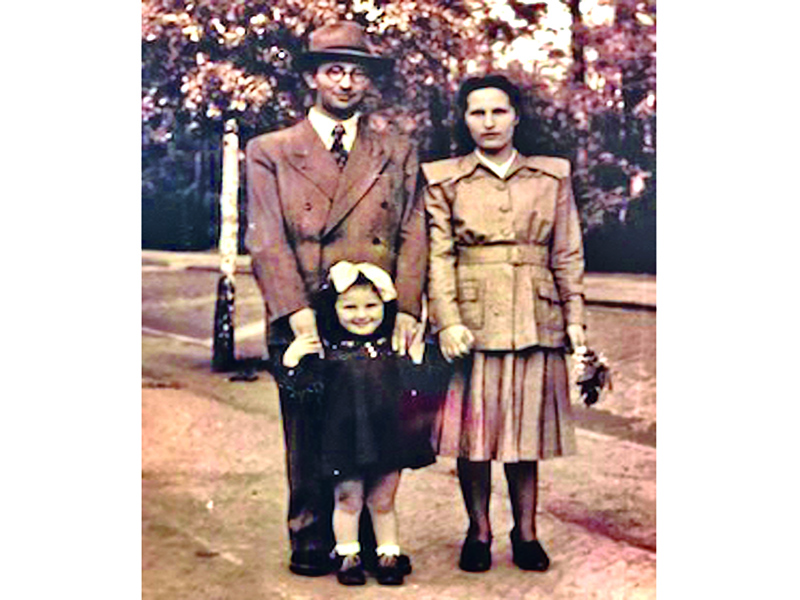
My grandfather was unlike any other grandparent I have ever encountered. The minute he saw me, he would engulf me in a giant bear hug and squeeze until my grandmother scolded him to let me go.
With all due respect to Dorothy Parker, "Girls who wear glasses, SHOULD get passes"
A loving recollection of her father and how his passing has inspired the author to get more out of whatever time she has in life.
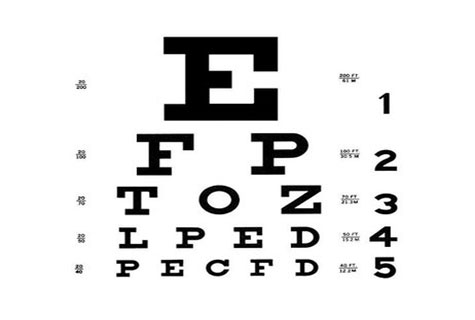
Seventeen visual skills are needed for success in school, sports, and everyday life.
Why Orthodox women tend to favor black over colorful clothing.


 July 3, 2026