יום ראשון, כ׳ תמוז תשפ״וSunday, July 5, 2026



Follow Us


Dr. Reuven Gafni is a senior lecturer at the Land of Israel Department at Kinneret College. He specializes in the field of synagogues and religion in the Land of Israel in the modern era, and the relationship between Jewish religion, culture, and national identity in the Land of Israel.
Read More
While the Rinat Yisrael siddur’s original editions relied on the support of the Religion and Education Ministries, the edition meant for Diaspora Jews was funded by the World Zionist Organization’s department for Torah education and culture in the Diaspora.

Even after the pogroms of 1391 and the expulsion from Spain in 1492, those expelled from Catalonia maintained their customs and nusachs – at least partially – which they took with them to new places, including North Africa (primarily Algeria and Tunis), Italy, the Ottoman Empire, and the Land of Israel.
Phillip Feldheim died in New York City in 1990. Ten years later the first edition of the siddur bearing his name – Tefilat Shai – appeared in Jerusalem.
Shrem’s unique musical talents quickly earned him the right to serve as the chief chazzan at some of the most central and well-known Syrian shuls in the city: at Magen David and then Bnei Yosef.
The different target audiences led to the siddurim being printed in two versions: while the siddurim for olim from the Soviet Union contained the Israeli national prayers, those sent through various clandestine paths to Soviet Jews themselves contained no elements which might anger the Soviet authorities.
In an effort to beat his competitors – both in the print and book sales business – Chinsky joined others in 1901 to found the Hebrew Publishing Company, the largest and oldest Jewish New York-based publishing house.
The name Rechovot Hanahar (Streets of the River), derived from its mention in Bereishit 36:31, was interpreted by Kabbalah as referring among other things to the period before Creation, and was also tied to names such as Nahar Shalom – one of the famous books by the Rashash himself.
Nowadays, stressing the shva na is an accepted and fairly common element in many siddurim. But when Ishei Yisrael appeared, it wasn’t common at all.
As has been noted elsewhere, Shlomo Tal originally sought to produce Rinat Yisrael based on nusach Sfard so as to unite people who had different traditions, but he found himself ultimately also producing siddurim for Ashkenazim and Mizrachi-Sefardi Jews.
The siddur had a number of versions from the outset – one of which was meant for schoolchildren – and at least one of which appears to have had an attached translation into Ladino, all sold in New York stores during WWI.
In terms of content, an organized and clear introduction was added to the siddur written by Professor Dov Rafel, and the prayers themselves were accompanied, as promised, by basic and brief halachic instructions, as well as midrashic and machshava passages which were included in the margins of each page, with clear lettering and in a different color.
The siddur originally came out in two volumes, numbering a total of 330 pages. Despite Rabbi Halevi’s desire to produce a complete siddur, he ultimately only managed to cover weekdays and Shabbat (alongside berachos).
Artscroll-Mesorah is one of the largest publishing houses in the Jewish world, and despite its strongly conservative character, it enjoys increasing popularity – including in nationally minded Israeli communities.
By their very existence, these siddurim attest to the fact that a general, national approach to prayer during Israel’s state holidays has yet to be established – for religious, ideological, and social reasons.
Aside from the dilemma between custom and text – which every editor likely deals with, implicitly or explicitly – Alsheikh also wondered about the siddur’s graphic design, while seeking to almost artificially fortify its identity as a religious prayer book.
The siddur’s opening pages include an introduction by Rabbi Dr. Shlomo Toledano, who describes the uniqueness and ancient character of the Moroccan nusach, while addressing much broader historical processes, which are usually not to be found in conservative siddurim...
New prayer houses such as these, which mix and match different traditions of prayer and custom, continue to be created all the time in many places. It is thus entirely natural that the siddur bookshelf also be enriched with new siddurim expressing this new trend, with approaches to prayer which previous generations would have found difficult to imagine.
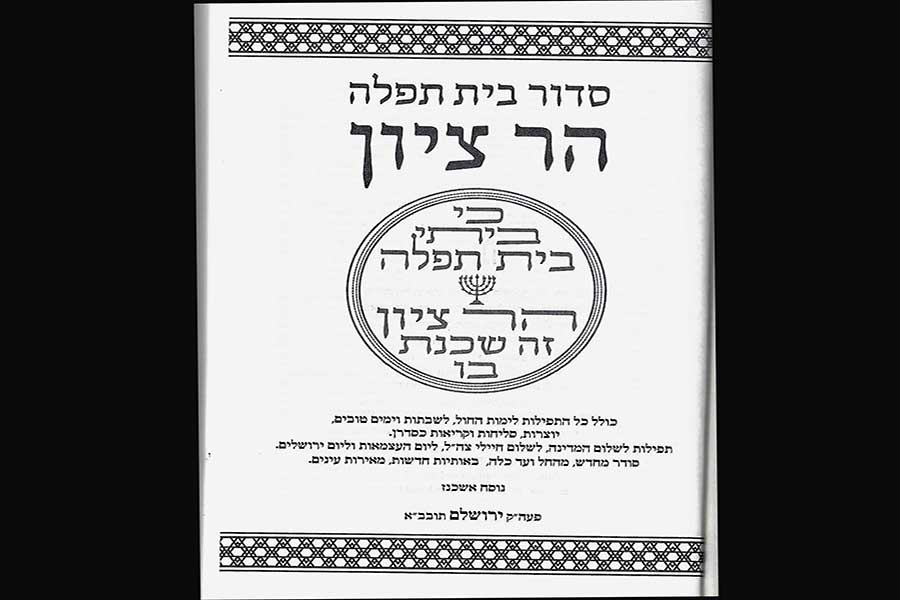
As a siddur meant for both religious Zionists and non-Zionist charedim, and much like siddurim of previous generations, the original Beis Tefilah also did not include the national prayers – those said every Shabbat and those said on Israel’s Independence Day, Memorial Day, and Jerusalem Day.
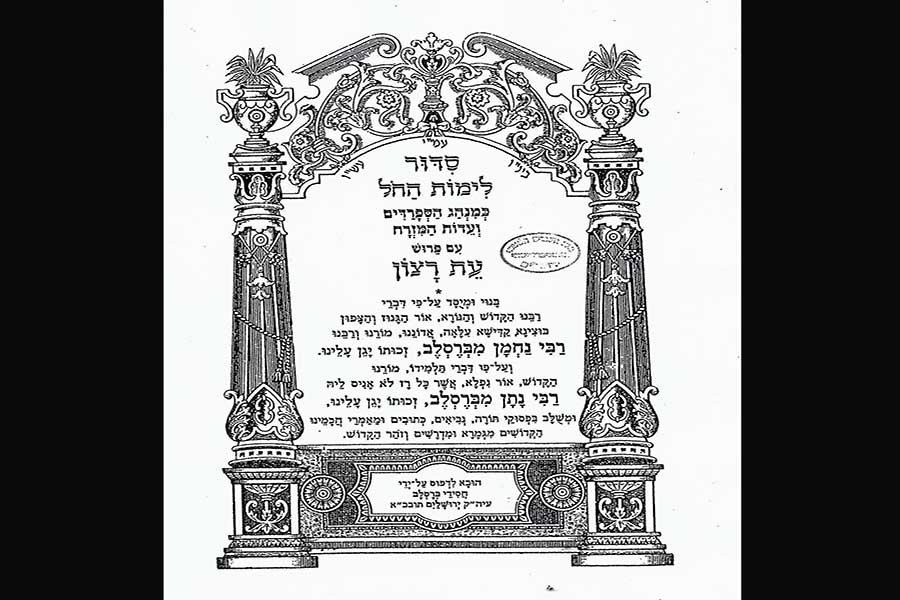
The siddur itself was Sephardi for all intents and purposes, but its subheading – “according to the minhag of the holy community of Sefardim of the Ma’arav and the Mizrach” – hinted at Rabbi Aburbeh’s principled and consistent ideological line, which strove already at this early date to fuse all existing Sephardi and Mizrahi prayer nusachim into a single, unified prayer formula.
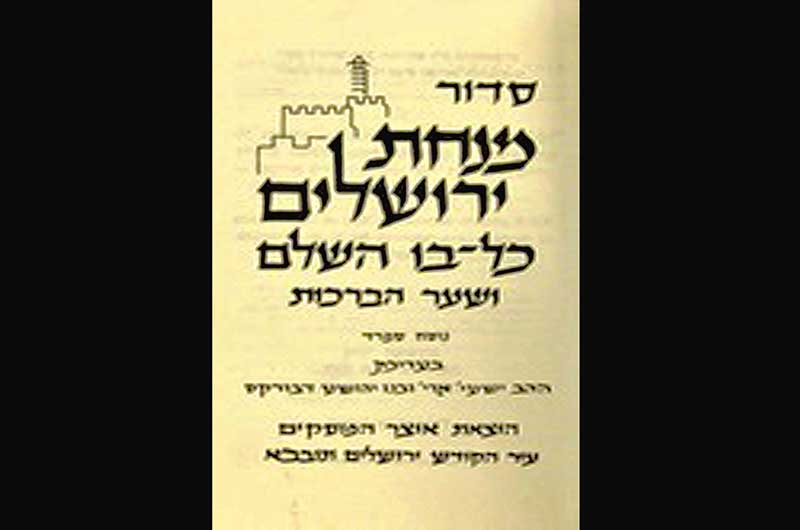
The prayers themselves, it should be noted, only appear after no fewer than 100 pages of prior content, and the book’s design is apparently based on the Siddur HaShalem previously published by Eshkol Press.
This highly popular machzor was so widely accepted that it was even quoted in the writings of major poskim, including the Chasam Sofer.

As mentioned, the siddur also included a complete Sefer Tehillim, divided according to the days of the week and month, something which was also considered part of the classical world of Jewish women’s prayer at the time.


 July 3, 2026