יום שבת, י״ט תמוז תשפ״וSaturday, July 4, 2026



Follow Us


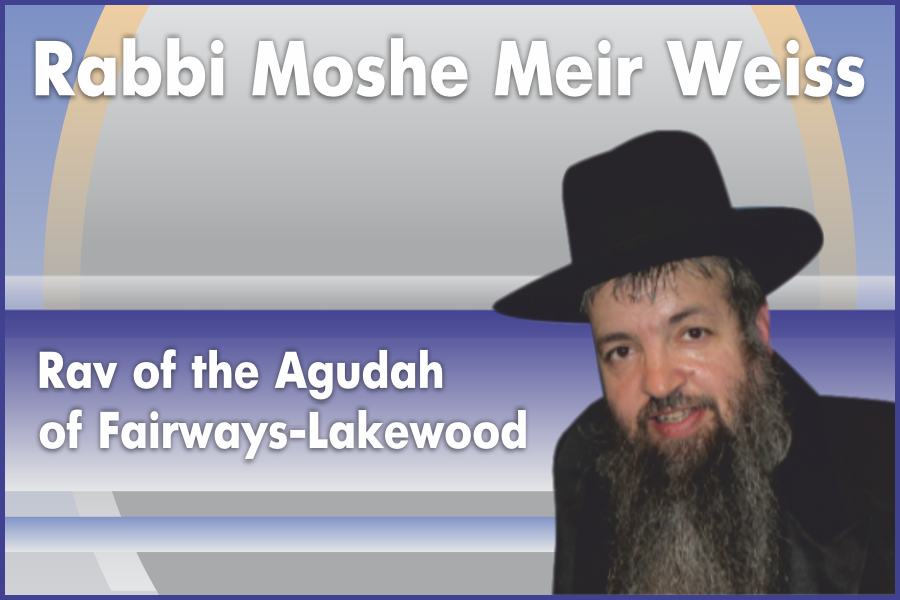
Rabbi Moshe Meir Weiss is now stepping-up his speaking engagement and scholar-in-residence weekends. To book him for a speaking circuit or evening in your community, please call Rabbi Daniel Green at 908.783.7321. To receive a weekly cassette tape or CD directly from Rabbi Weiss, please write to Rabbi Moshe Meir Weiss, P.O. Box 658 Lakewood, New Jersey 08701 or contact him at RMMWSI@aol.com. Attend Rabbi Weiss’s weekly shiur at Rabbi Rotberg’s Shul in Toms River, Wednesday nights at 9:15 or join via zoom by going to zoom.com and entering meeting code 7189163100, or more simply by going to ZoomDaf.com. Rabbi Weiss’s Daf Yomi shiurim can be heard LIVE at 2 Valley Stream, Lakewood, New Jersey Sunday thru Thursday at 8 pm and motzoi Shabbos at 9:15 pm, or by joining on the zoom using the same method as the Chumash shiur. It is also accessible on Kol Haloshon at (718) 906-6400, and on Torahanytime.com. To Sponsor a Shiur, contact Rav Weiss by texting or calling 718.916.3100 or by email RMMWSI@AOL.COM. Shelley Zeitlin takes dictation of, and edits, Rabbi Weiss’s articles.
Read More

I think we can use the rule I once heard from the late Telzer Rosh Yeshiva, Rav Chaim Dov Keller, zt”l, zy”a: If something will not bother you three hours from now, just be quiet and forget about it. If, however, the issue is of a more lasting nature, you must discuss it at a time when everyone is more level-headed and not so defensive.
If Korach was so great yet he nevertheless succumbed to the yetzer hara of machlokes, of fighting, what chance do we have?
Rav Aharon Yehuda Leib Shteinman, zt”l, whimsically says that a better segulah against anger is simply to keep one’s mouth shut!

To sum it up, if we don’t want Gehennom, if we want to avoid looking like a fool, if we don’t want to lose our wisdom, if we don’t want to render ourselves senseless, and if we don’t want to give ourselves over to an evil controller, we need to train ourselves that it shouldn’t be easy for us to get angry.
The study of Pirkei Avos contains lesson after lesson on how we can improve our daily behavior.
When we follow their advice and pay attention to their criticism, they actually give us life in the World to Come.

The obvious question is that our commitment seems to be in the wrong order. Wouldn’t it be more sensible to say Nishmah v’Na’aseh, first saying “Let me hear,” after which I could then responsibly say, “I’ll be able to do it.”
Reb Eliezer tells us that on Pesach and Sukkos it is perfectly all right for one to devote the whole of the Yom Tov to learning Torah. One is excused from the celebration of the chag if he immerses himself in Torah study.
One of the great lessons of Shavuos is for us to reaffirm our commitment to being a kind, loving people.
We need to teach our children to honor the shul rabbi. The one who, on a regular basis, warns them about the evils of lashon hara, the dangers of smoking, vaping, gambling, and addictive gaming.
Shimon HaTzaddik was so called because he was the most righteous person of his generation and yet, in Pirkei Avos, there is but one Mishna recording his teachings.
Another special advantage of Torah is that It protects us from the advances of the yetzer hara.
Another reason why the yetzer hara is firing on all cylinders is that of the entire year, the Seder night is the greatest opportunity we have for teaching our descendants.
Why specifically on the second night? Bear in mind that we never say Eishes Chayil on Yom Tov. It’s only on Shabbos, so why the exception?
We should realize that at the Seder we are not just talking to our children. Actually, we are showing them how to make a Seder. We are investing in our grandchildren and generations beyond.
In our Seder right after the Ma Nishtana, we testify to this in the Haggadah, saying that if Hashem hadn’t taken us out, we, our children, and our children’s children, would have been subjugated to an Arabic, slave-like existence.

When I think of polarity, I think of a wife who wears a shmata when her husband comes home but gets dressed to the nines when she goes out with her lady-friends!
We can make the startling conclusion that the entire event of Purim, the intended genocide of the Jewish people and the miraculous reversal that led to the downfall of Haman and the Amalekis, all hinged on the slander and the snitching of the noblemen at the king’s gate.

The Medrash says that water is unique among beverages in that it is only beneficial if one is thirsty. With other drinks, we might enjoy them even if we’re not thirsty, such as a soda or juice. But water only has value when we are thirsty.
Why do the Ten Commandments not include the most important of all mitzvos, the study of Torah?
This was measure for measure for the lachatzeinu, intense pressure, that the Egyptian taskmasters inflicted upon Bnei Yisrael nonstop.

As we familiarize ourselves with the concept of middah k’neged middah, it should be an incentive for us to adopt certain behaviors and inhibitions to avoid other behaviors.
In general, Klal Yisrael chooses its great people very differently than does the other nations. Rav Aharon Leib Shteinman, zt”l, zy”a, never ran for office. Rav Pam, zt”l, zy”a, never strutted his credentials. To the contrary, they ran from honor and it was that very humility that knighted them to be the leaders of our people.

The Medrash teaches that if one falls off a roof and breaks every bone in his body, he will need many casts and bandages in order to be repaired. But, if one sins spiritually, and thereby injures his entire body, Hashem fashions one bandage that can cure him through and through.
Our Commentators grapple with the puzzle of why the saintly Rachel deserved to die. Some say it was because she caused her father anguish by stealing his precious teraphim. However, many explain that the fault lay in the fact that she didn’t consult with her husband Yaakov and learn his opinion before stealing the teraphim.
The Chinuch, the renowned master of the mitzvos, wonders how is it possible that, if someone causes us to lose our job, disrupts a marriage or wrecks a shidduch, that we should not seek revenge or even nurse a grudge. He explains that, if we have the proper Torah hashkafa, any wrong that occurs to us can only transpire because of our own faults.
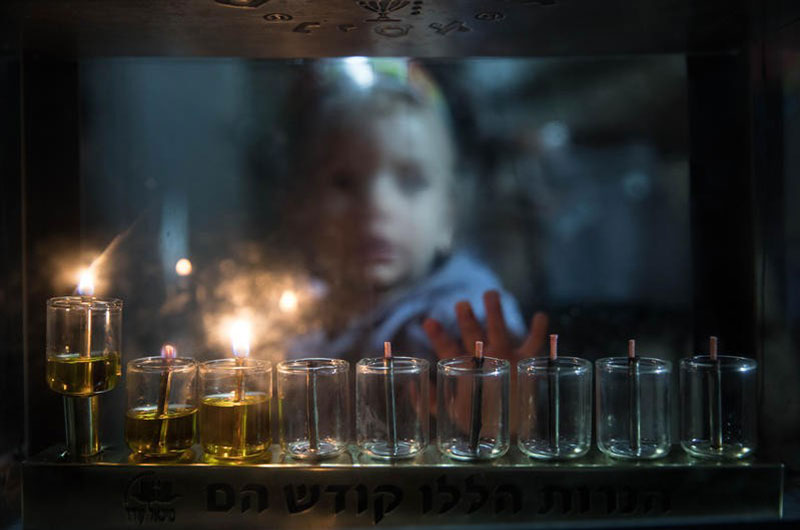
In America, there is a strong tendency to feel that bigger and brighter is always better. Upon deeper reflection, many times this is not the case, however.
Even when we are fully cognizant of this hornet’s nest brewing within us, we still need Hashem’s help to succeed.

I said that I believe what this popular saying is meant to convey is that we mistakenly believe that when we make plans, we are in control. That is what Hashem is laughing about.
The considerable amount of danger that is engendered by being in proximity to holiness is not simply a matter of historic interest. Rather, it pertains to every observant Jew in a very real way, every day of our lives.
We ask Hashem that the Satan should never succeed in causing us to regret having done a mitzvah.
I instituted in my shul that once coats are hanging on the coat rack, the one who wants the window closed gets his way.
The word chein is the root of the word chinam which means free. If we merit to find chein in the eyes of Hashem, He will freely give us things even if we don’t really deserve them.
The tragic demise of mankind during the era of the flood was not just a punishment for that wicked generation. Even more so, it was perhaps a series of powerful lessons to be studied by G-d-fearing people throughout the millennia about behaviors that are so toxic that they can cause the absolute destruction of an entire world.
Or, beseech, Hashem, I want to give more tzedakah this year. Can I have a bump in my livelihood so I can help my children more, or provide for my elderly parents? My wife has been wonderful. I want to be able to get her a nicer sheitel, some jewelry. Help me please, Hashem, to accomplish these goals.
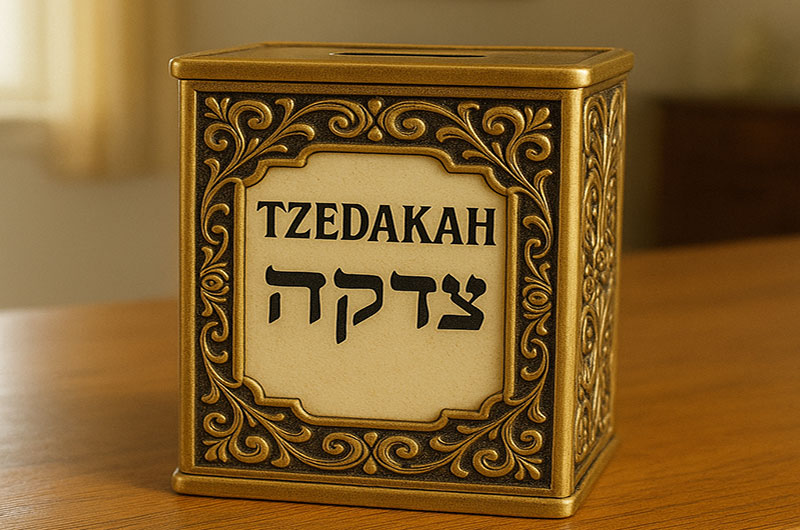
The protection of our charity extends to our children and grandchildren.
We believe, of course, in the accuracy of the Torah. But it certainly strengthens our belief when we see the words of the Torah come alive throughout the ages.
When we pray for Hashem’s return with the coming of Moshiach, the rebuilding of His House, the Beis HaMikdash, the restoration of His monarchy, the Malchus Beis Dovid, that is the ultimate ani l’Dodi, I am for My Beloved, for that is for Hashem Himself.

How contemporary the Gemara rings when it says the destruction of Yerushalayim puzzled and perplexed the sages, prophets, and angels! It shouldn’t cause us any wonder that we are unable to explain the atrocities of the Holocaust when even prophets and angels were confounded by the similar disasters of yesteryear.
Another way to get close to the Shechinah is by visiting the sick. As Rashi teaches us in Parshas Vayechi, The Shechinah always resides by the head of a choleh, an ill person.
Striking the right balance between Torah and one’s livelihood is a tricky business. Especially since making a living is a mitzvah in itself.
The attitude that one knows that you’ve got my back isn’t born overnight. It’s achieved with a persistent series of small acts and gestures where husband and wife demonstrate that you are first in my book.
I believe that Hashem is sending these unfortunate people to us as a gift to enhance and strengthen our prayers.
Many marriages have been ruined by the well-meaning but poor advice of friends.
He leaped off the jeep, shouting that he’d take the next one.
As we are taught, Ein tzaddik ba’aretz asher yaaseh tov v’lo yecheta – There is no righteous person in this world who does good and doesn’t sin, there is certainly what to worry about.
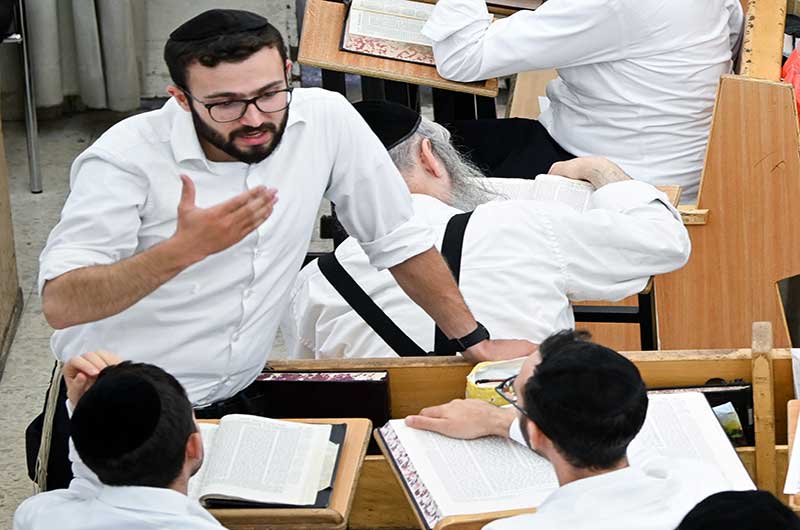
How do Torah scholars make more peace in the world?
Torah does not have a set place. It can be found anywhere. It should be found everywhere.
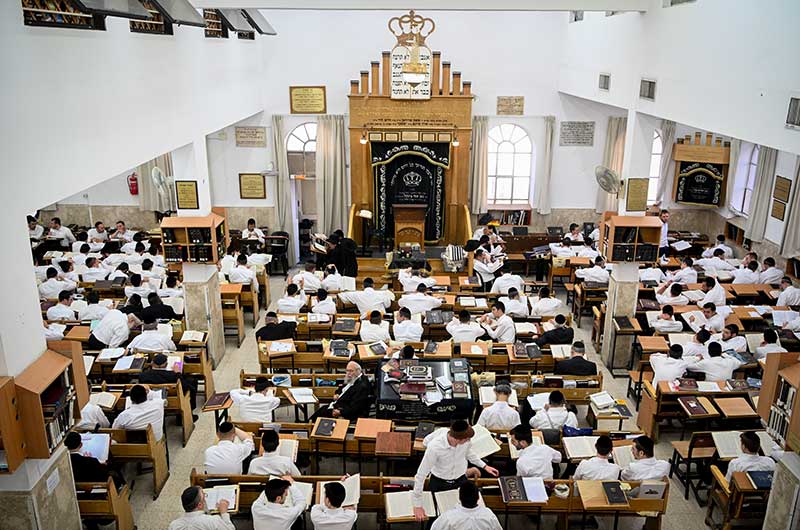
We must know that the mitzvah of kavod haTorah is even greater than learning Torah. As the Gemara in Masechtas Megilla in the first perek states categorically that while learning Torah does not supersede the hearing of the megillah, giving honor to the Torah does.

Sometimes, the yetzer hara pushes us off until the summer – and then in the summer, he tells us that we need to rest in order to recharge our batteries before the coming winter.

It is interesting to note that while everyone assumes that the drowning of the Egyptians in the Red Sea was punishment middah k’neged middah for drowning our children in the Nile, this is really not such a simple explanation.

It is no coincidence that the seder night was when Yitzchak gave the blessings both to Yaakov and to Eisav, thus demonstrating his love for Eisav too!

The Gemara teaches us that one who has three traits can consider himself a true talmid, a disciple, of Avraham Avinu. One of these traits is ayin tova, a good eye, which means the characteristic of seeing the good in everyone.
I will learn the art of saying I’m sorry, showing that I empathize with the damage I’ve done and demonstrating that I’m making concrete corrections so that it won’t happen again. This is very different than the But, I said I’m sorry already approach!
In the spirit of Passover spiritual cleansing which we are commencing, here is a list of fifty-two areas of life which perhaps could use some ongoing scrubbing and scouring.

The holy rebbe, Rav Yisroel of Ruzhin, adds that Purim is even more, for while on Yom Kippur Hashem forgives only with teshuva, repentance, on Purim He forgives as soon as we ask Him, as it says, Kol haposhet yad nosnin lo.
The Megillah is called Esther, which means hidden. This is because the Divine Hand was cloaked under the guise of palace intrigue, and within the lust and caprice of the royal court.

It is a known fact that the yetzer hara, the evil inclination, is selective about which areas he strives to get us to stray. For example, the relationship he tries the hardest to wreck is the one we have with our spouse.

This message of hope – that all is not lost and that one can always climb back from a spiritual morass without needing years to do so – is a vital lesson that is important to remember every day of our lives. This is one of the reminders of the tefillin.
Tefillin is a daily reminder to avoid sin which would result in punishment and to do mitzvos which earn us great reward.

This concept is consistent with the Gemara in Masechtas Sanhedrin that states categorically, Adam la’amal peh nivrah – A person was created primarily for the toil of the mouth. In other words, the greatest arena of achievement in life is in one’s control of their speech.

The fundamental idea of how important is the trait and the power of keeping ones mouth shut is echoed in Pirkei Avos where it teaches us, Shimon b’no omeir, Kol yomai gadalti bein hachachamim, v’lo matzasi l’guf tov m’shtika – Shimon, his [Rabban Gamli’eil’s] son said, All my life I grew up amongst the sages and I never found anything better for the body than the art of silence.
Reb Moshe asks, Why would we need someone coming out of a coma to teach us something so obvious?
While the yeitzer hara has many arrows in his quiver, and his aim is focused on getting us to speak lashon hara and to fight with our spouse, to look at the wrong things, and to say hurtful words, there is nothing that the yeitzer hara tries harder to accomplish than to stop people from learning Torah.

It’s always important to remember how different we are, and to thank Hashem that He allowed us the privilege to be part of this Holy Nation.
Since the objective of marital unity brings the coveted blessing of the Shechina, the yeitzer hara tries mightily to block one’s marital harmony. We therefore must strive vigorously to maintain the magic of our oneness at all times.

The reward for fulfilling the mitzvah of Ner Chanukah properly is great indeed. It is something we strive for every day. It is, comprehensively speaking, the goal of all our toil.
It is surprising that the names are not in chronological order, for first Moshe Rabbeinu was saved from the sword of Pharoah and only then was he a fugitive in Midyan. So why did he give the name Gershom first?
It is clear that Yaakov felt that danger of assimilating his brother's ways was the more dangerous of the two possibilities.
When you want to get the most bang-for-your-buck, you try to go to someone who is a specialist in what you need. When it comes to prayer, Yitzchak is the specialist for, while Avraham is the Amud HaChesed, the pillar of kindness, and Yaakov is the Amud HaTorah, the pillar of Torah, Yitzchak is the Amud HaAvodah, the pillar of Divine service, which is prayer.
The Gemara tells us that if one should encounter the pillar of salt which Lot’s wife turned into, he should make two blessings: Baruch Dayan HaEmes, Blessed is the true Judge [Who punished Lot’s wife], and Baruch Zocheir tzaddikim, Blessed is He who remembers the righteous.

Rav tells us that whoever goes to visit the sick, Nitzol m’dino shel Gehennom, will be saved from the punishment of Gehennom.
Hashem chose this precise juncture to teach us the importance of respecting a wife. This is to teach us that even in trying times, when under extreme stress, we must hold dear to the responsibility to cherish and treat with great care our soul mate.

The Chofetz Chaim, zt”l, zy”a, remarked that the partnership between Sheker and Pachata is still thriving thousands of years later in our time so that any activity built upon falsehood, any business deal formulated through lies, is doomed to eventually end in loss and damages since it is handed over to Pachata who ensures its doom and ruination.
Many people wait to review the parsha on Shabbos, and this is their undoing! Shabbos is at the end of the week and, if one gets busy or is too tired (a common occurrence), the week is over and its already time for Parshas Noach. Therefore, start making inroads on Sunday.
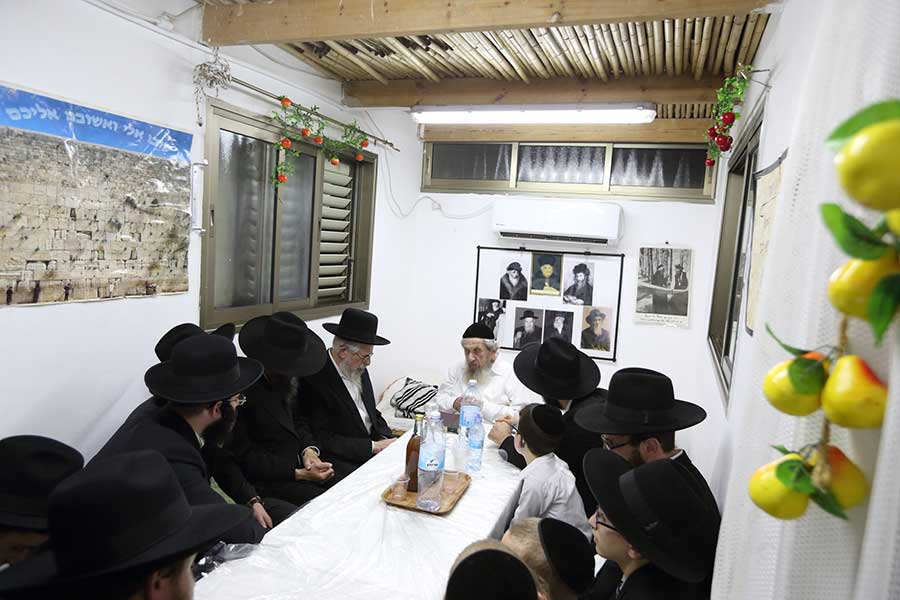
This commemoration is considered so vital that, while for most mitzvos it is sufficient simply to have in mind that one is doing the command of Hashem, this is not good enough when it comes to the precept of Sukkah.
Is there a mitzvah to eat the night before Yom Kippur? If it is merely in preparation for the fasting, it is questionable whether the night before is that helpful.

A person, to his chagrin, realizes that he doesn’t say Modeh Ani in the morning. Regular teshuva is to regret this and to strengthen himself to be more careful in the future. A perfect teshuva is when he realizes that the reason why he forgets it in the first place is because he’s not thinking enough about Hashem.
All of us petition Hashem for another year of life, for ourselves and our loved ones. But we don’t simply ask for another year of life. We ask for a better year with better health, with better shalom bais, with better parnassa. Better, better, better.

A large percentage of us regrettably neglect the fifth commandment; honoring our parents. Due to the frenetic pace of modern life, this obligation is often woefully shunted to the side.
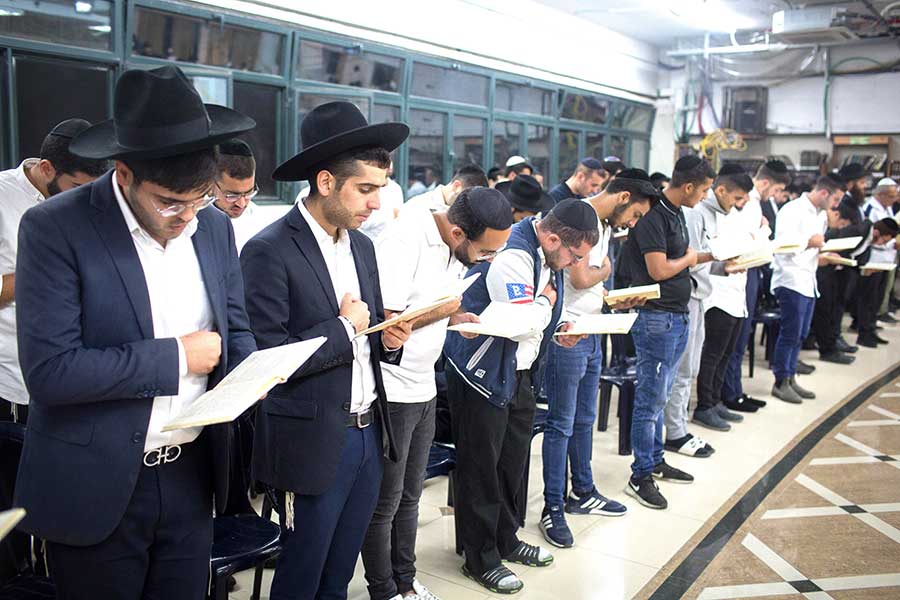
Rav Moshe Shternbuch, zt”l, zy”a, urges us to get moving with our Elul pursuits as early and as quickly as possible. He compares it to a wedding. If you go early, the baalei simcha, the celebrants are more likely to notice you and to interact with you personally.
If you don’t rinse out your mouth in the morning before davening, grab the opportunity to do so. You can fix in your mind that you are doing it so that the many names of Hashem that you will articulate during davening will come from a clean and pleasant source.
Hashem, I know that this person might even repeat such an offense against me in the future but I am still willing to forgive him for now. Please forgive me as well even though I might likewise slip up with aveiros, sins, sometime in the future.
Taking one’s time to have these thoughts in mind is well worth it. The Gemara informs us, Kol hamarich b’Echad, marichin lo yomov u’shnosov – Whoever prolongs the word Echad will have one’s life qualitatively and quantitatively prolonged.

I believe the nechama, the comfort, is that we have changed as a result of our efforts during the Three Weeks and the Nine Days, learning how to be more careful with sinas chinam, baseless hatred, and lashon hara, evil slander.
The Chovos HaLevovos gives us a chilling deterrent from speaking lashon hara. He warns us that if we speak lashon hara about someone, Hashem will take away some of our merits and give them to the person we spoke badly about.

I realized that although he was in his late 80s, he wanted to walk from the bungalow all the way to the parking lot – a great distance – in order to personally greet her upon her arrival. That left an indelible impression upon me, of how a husband is supposed to show a wife that she is wanted.

The successful relationship between husband and wife makes the home into a sanctuary as it says, Ish v’isha shalom beineihem, Shechina shruyah beineihem – A husband and wife, if there is peace between them, then the divine Presence dwells between them.
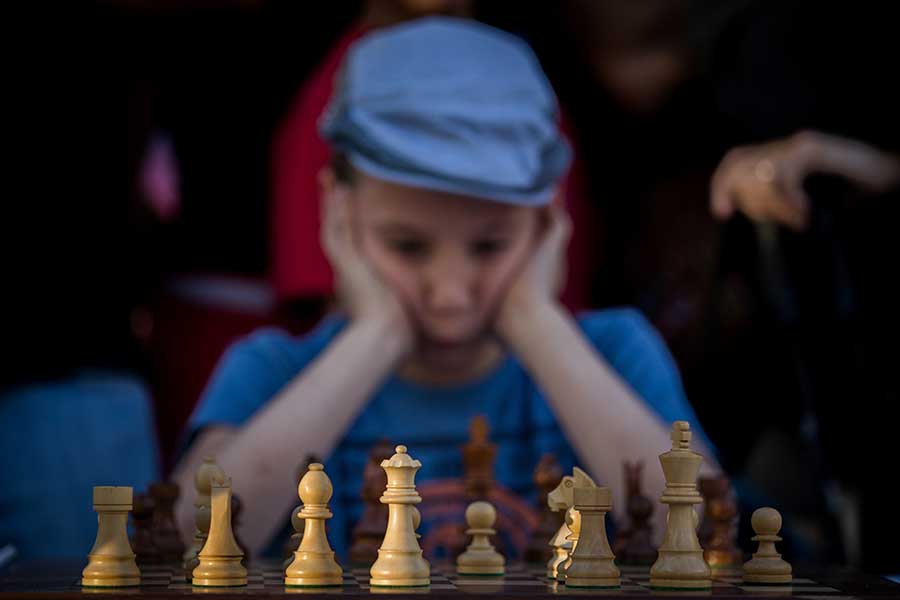
As you get better in chess, you just can’t rely on your opponent to make a mistake. Better players won’t make mistakes.
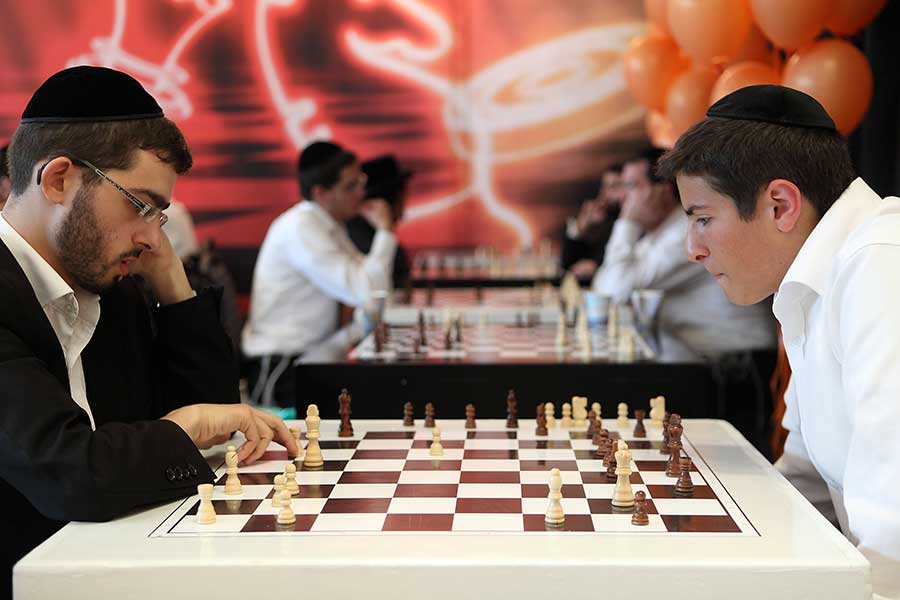
The smart player always trains himself to think what the other person on the other side of the board is thinking about.

The pastime of chess, in a world where there are so many hobbies that can atrophy the brain – from vegetating in front of a screen to pounding feverishly the controls of addictive computer gaming – is a refreshing opportunity to activate the mind and train it in many beneficial abilities.
What is so exceptional about the blessing Magein Avraham that the Shulchan Aruch says that we have to say Shemoneh Esrei over again if we didn’t have kavanah? The answer is because the first blessing is the password to get into Hashem’s Palace, to have an audience with HaKadosh Baruch Hu.

Swimmers should be cautioned about the absolute need for proper supervision and the great danger of going solo to the pool. Also, remember that long exposures to the sun can be unhealthy. Use a sun blocker!

When we think this Shavuot about the revelation at Sinai, let’s remember that the Torah was given surprisingly in the midst of billowing smoke and blackness.
This is vital information for parents and educators, to know how to direct their children to the right school and the correct teachers.
Please, return us the real thing which is bringing our sacrifices in the Beis HaMikdash.
A beautiful example of how heaven is exclusively a place of peace can be found in a Gemara in Maseches Sotah. We are informed of a fascinating fact: Daily, in the desert, together with the mon fell women’s beauty treatments because that which beautifies a woman fosters more love and harmony in the home, which promotes peace.
The ensuing requests also fit nicely for we follow this up with the request, L’ma’an yeichal’tzun yididecha – In order that You deliver Your friends.
I’d like to offer a mighty challenge. The next time you go to shul to pray, tell yourself that you’re planning to use your mind as much as your mouth in the synagogue – for proper service of Hashem has more to do with the mind and the heart than with the mouth.
We therefore first ask Hashem that we avoid sinful speech and forbidden thoughts, and then we can turn to requesting that our mouth be filled with the beautiful words of Torah and Its holy thoughts.


 July 3, 2026