יום שבת, י״ט תמוז תשפ״וSaturday, July 4, 2026



Follow Us


Rabbi Reuven Chaim Klein is a freelance researcher and scholar living in Beitar Illit. He has authored multiple books and essays, including “Lashon HaKodesh: History, Holiness, & Hebrew” and “God versus Gods: Judaism in the Age of Idolatry.” He studied for over a decade at the Mir Yeshiva in Jerusalem and BMG in Lakewood before he earned his MA in Jewish Education from Middlesex University/London School of Jewish Studies. Any questions, comments, or suggestions can be addressed to him at historyofhebrew@gmail.com. Questions asked may be addressed in a future column.
Read More

Laban wasn’t the only person in history whose given name means “white.” In fact, names meaning “white” or “bright” have a storied history, particularly in European nobility.

Despite the original Shulamit not being a name (but rather a description), in post-Biblical times, that word came to be used as a personal name given to Jewish girls, and in the last generation or so has actually become quite popular.

The critique is not merely legal but civilizational: instead of producing, building, or creating, the gambler sits passively, hoping that chance will deliver profit.
When we recall the story of Chanuka, we think not only of the Hasmoneans’ stunning victory over the Seleucid Greeks, but also of the special gift that followed: the miracle of the oil. In the newly rededicated Temple, a single sealed jar of pure olive oil was found, enough for just one day – yet it burned for eight.

As you likely know, the Jewish surname Barber originates specifically within the Ashkenazic Jewish community. While this doesn’t entirely rule out possible Hebrew or Aramaic origins, it makes them less likely.
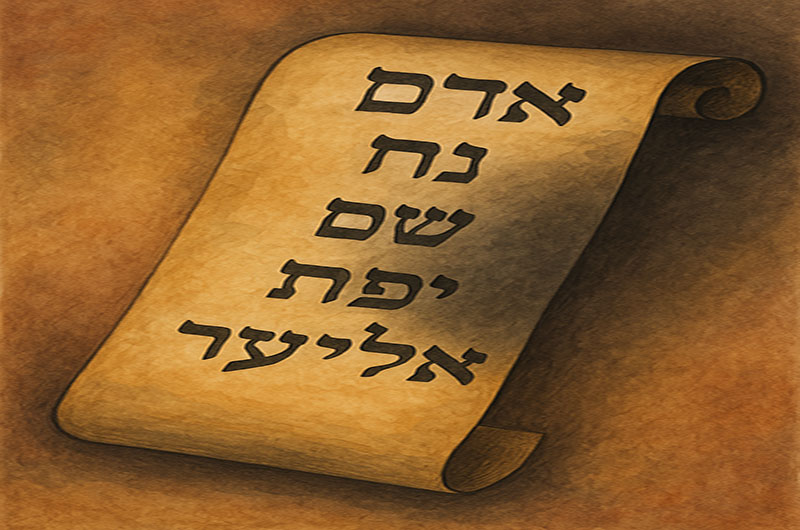
One of the problems with the Mabit’s position that the Chida focuses on is how Moses was able to name his son Eliezer, if that name is clearly from the time before Abraham (as we mentioned)?
The earliest instances of Lavi as a first name that I know about are all found in the halachic responsa of the Algerian Sage Rabbi Yitzchak bar Sheshet (1326–1408), also known as the Rivash.

There are several leniencies in applying this restriction when the names do not totally match up. For example, if the names do not match exactly – such as a father-in-law named Yaakov Yosef and a son-in-law named Yosef – some poskim permit the marriage.

The name Maya ranked as the fifth most popular name for Jewish girls born in Israel in 2023.

What do Pope Benedict XVI, Barack Obama, Naftali Bennett, and Hosni Mubarak all have in common? Yes, they were all political leaders in the early 21st century, but this column is about names, not politics. So, my answer is actually that all their names are related to each other. Let me explain.
I am anticipating a deluge of angry letters from people listing off important persons named Elimelech that I’ve ignored, but the truth remains that despite the continued use of that personal name since Biblical times, Elimelech was always a fairly rare name until the times of the Noam Elimelech.
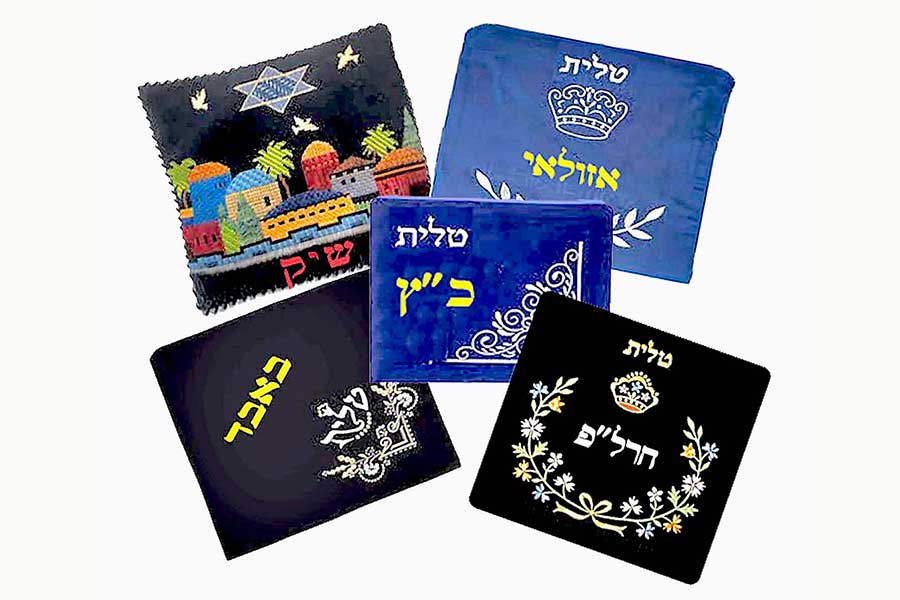
Just as acronyms serve modern convenience, they also hold a unique place in Jewish history and culture, where many family names actually derive from meaningful acronyms. These surnames serve as more than mere identifiers.
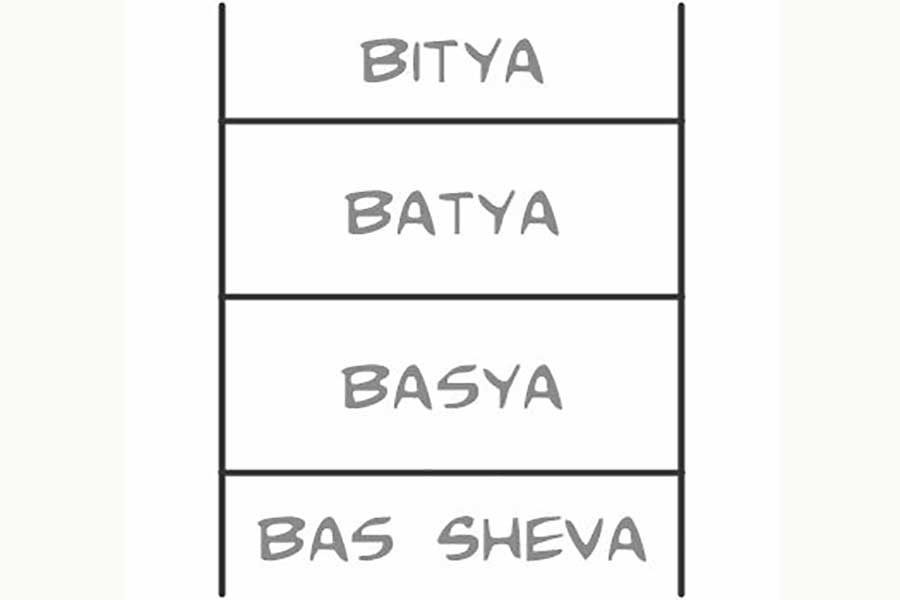
Interestingly, some argue the exact opposite: her original name was Batya, but she changed it to Bitya as an act of humility.
As an interesting aside that only etymologists like myself could appreciate, the name Juanacita itself sort of has a connection to Chanukah. This is because that name derives from the name Juan/John, which is a Latinization of the Hebrew name Yochanan.
In which we also explore the names Edna, Eidel, Ettel, and more.

...even though Avshalom the person might have been a wicked fellow, since his name has a positive meaning (father of peace, or my father is peace or something along those lines), it is still appropriate to use this name in naming our children.
While it is true that most typically Jewish names are simply taken from Tanach or Chazal (especially male names), not all do.

It offers an insightful exploration into the intricate realm of tzimtzum, providing invaluable snippets of historical context that enrich the understanding of its diverse integrations across various contexts.
The prophet Zecharia foretells of the Messianic Era – which will occur long after the Canaanites had ceased to exist as a nation – when there will no longer be any c’naani in the Holy Temple (Zecharia 14:21).
In Modern Hebrew, the term miklat came to refer to a bomb shelter, which likewise receives those fleeing air raids and protects them.
Resnick’s book brings to light much nuance that has been lost in discussions about the Holocaust and who acted nobly. Indeed, the whole topic is a bit murky, but Resnick provides the reader with enough information to make his own informed decision.
Both of these words are commonly translated as “nothingness,” but understanding the nuances expressed by these ostensible synonyms will help us better understand what exactly the Torah means to teach us about the state of the world before Creation.
In this article, we explore the etymologies of ravak and two other Hebrew terms for an unmarried or single man – panui and bachur – try to zone in on the nuances they express.
In this essay, we explore the verb romes and its etymology, with an attempt at discovering if and how romes differs from its apparent synonyms, dorech and boss.
In this essay, we take a closer look at the Hebrew word used for Phineas’ weapon of choice and compare it with other Hebrew words like chanit and kidon that seem to refer to the same or very similar weapons.
Instead of viewing atar and makom as pure synonyms, the aforementioned exegetes all make a point of noting that atar is actually an Aramaic word while makom is Hebrew.
In truth, the way I translated the first clause in Moses’ defense against Korach’s campaign actually follows the explanation of Rashi and Targum Onkelos, who explain the word echad as referring to one of the people, as in Moses did not even repossess a donkey from even one Jew.
Besides the occasional massacres in which English Jews were actually killed, the author provides detailed accounts of the "punishments" levied against Jews for simply being Jewish...
The term asirah derives from another triliteral root, aleph-samech-reish, which appears close to ninety times in the Bible.
Despite his traditional upbringing, Jellinek began to question some of the traditional practices of Judaism, particularly the emphasis on ritual and the strict adherence to Jewish law.
In this passage, three different words are used for “rope” or “string”: chevel, tikvah, and chut. This essay attempts to trace the etymology of those words, seeking to clarify exactly how they relate to one another.
Various prohibitions in the Torah use the word lo when mentioning a proscribed act while the rabbis instead use the word bal.
The word midbar appears approximately 270 times in the Bible and is often attached to a proper place-name, like Midbar Sinai, Midbar Sin, Midbar Paran, Midbar Shur, Midbar Kadesh, Midbar Damesek, Midbar Ein-Gedi, and Midbar Yehuda.
As mentioned last week, the Bible actually uses both regimah and sekilah in the case of Achan (Joshua 7:25). Rashi explains that this is because Achan himself was subjected to regimah, while the animals he took as booty were subjected to sekilah (see also Targum and Radak there).
The term sekilah appears in two instances of men who were stoned to death: Achan, who illegally took the spoils of war from Jericho (Joshua 7:25); and Naboth, against whom Jezebel and Ahab conspired to take his vineyard (I Kings 23:10-15).
Although the word shein usually means “tooth,” sometimes it refers to things made out of ivory, which is a material made out of teeth.
Maimonides (Guide for the Perplexed 1:9) writes that the idea of a kisseh implies importance and power, presumably because in ancient times ordinary people did not have chairs but merely sat on whatever flat surfaces were available.
The first Jews of Eastern Europe were of a distinct variety who spoke a Judeo-Slavic dialect known to scholars as Knaanic. This dialect was later rendered obsolete by the arrival German/Yiddish-speaking Ashkenazim, whose language became somewhat influenced by Knaanic, but also essentially caused it to fizzle out
Many other sources view the word Mitzrayim as a portmanteau of meitzar (narrow, border, strait) and yam (sea).
If I understood him correctly, Rabbi Pappenheim differentiates between zavit and pinah by explaining that a zavit refers to the inner part of a corner, while a pinah refers to the outer part of a corner.
Rabbi Pappenheim relates the word zavit to the word ziv (“splendor,” “radiance”), and he offers two different ways of explaining the connection between the passages.
When Maimonides (Laws of Klei HaMikdash 2:4) translates the ingredients for the ketoret into Arabic, he renders tzari as al-balasan (i.e., balsam), but the Biblical term for this ingredient is actually nataf (Exodus 30:34), literally meaning the thing that drips.
Many commentators explain that achashtranim refer to mules that were born from the union of male donkeys and female horses (as opposed to hinnies, which are born to male horses and female donkeys and are typically weaker beasts).
While both retzicha and harigah refer to the act of taking another’s life, Rashi’s grandson Rashbam lays down a general rule to distinguish retzicha from harigah. According to Rashbam, retzicha always refers to killing somebody for no legitimate reason.
The Hebrew and Latin terms for scribe are similar to each other in that both are cognate with the word for book in their respective languages (sofer and sefer, libellarius and liber).
While the term amidah is teleologically neutral and simply relays the notion of standing in place, the term nitzav implies standing for a specific purpose.
In his commentary to Sanhedrin 67b, however, Rashi says the Talmud holds that lahat is something performed by the practitioner himself, while lat adjures sheidim to act on one’s behalf.
As we explained earlier, “drawing water” and “lifting up” can actually be seen as one act.
Various permutations of this word appear around 130 times throughout the Bible.
The Torah recounts a series of incidents between the shepherds employed by Isaac and those employed by Avimelech, the Philistine king of Gerar, in which the former dug wells, and the latter tried to usurp control of those wells.
Curiously, Rabbi Pappenheim argues that the word neshek (“weapon”) also relates to this root, because two opposing combatants approaching each other on the battlefield resemble two lovers approaching each other for a kiss, or because the mechanics of the neshek create a certain type of consistent noise.
Interestingly, Rabbi Yaakov Emden (1697-1776) argues for a Hebrew etymology of the word ushpiz in the sense of host by explaining it as a portmanteau of the Hebrew phrase yesh po zin (there is sustenance here).
While the words rechush and mikneh always appear in singular form in the Bible, the word nechasim always appears in the plural.
...the word sod expanded in Rabbinic Hebrew to refer to any sort of restricted or confidential information to which only a select few are privy. Hence, the word sod came to mean secret.
In Modern Hebrew, the term hadar was redefined to refer to the entire citrus genus. This includes all sorts of citrus fruits, like oranges, grapefruits, lemons, limes, tangerines, pomelos, kumquats, mandarins, clementines, and more.
Lily’s story opens with a vivid description of her idyllic childhood and upbringing in the quaint Hungary town.
When monies are invested into a potential endeavor, the undertaking can go in one of two possible directions – the principal can be lost, or it can produce profit.
According to Rabbi Bedersi, klimah is the most intense type of embarrassment: it results from somebody doing something that he was not supposed to do, or somebody being called out for his misdeeds.
Academy of the Hebrew Language and another article by Dr. Moshe Raanan of Herzog College explain that even though in earlier times the terms efroach and gozal were indeed synonymous, in Modern Hebrew there is a difference between these terms based on a zoological distinction.
In this scholarly study, Zilbergerts upends the conventional take on those early Modern Hebrew writers.
Now that we’ve seen the entire list, we can better appreciate a comment that Rashi made off the cuff.
The famous Burning Bush where Hashem introduced Himself to Moses was called a sneh, and that word appears a total of six times in the Bible.
One of the appellations given to Jericho in the Bible is Ir HaTmarim, “the City of Dates.”
It seems that the principle meaning of the root reish-kaf-samech is “to tie together.” When things are tied together, the nexus of the knot is the point where their connection is strongest and most-highly concentrated.
Rabbi Pappenheim postulates that there are two different types of moistness: one refers to something wet on the outside but not necessarily on the inside, while the other refers to something saturated with liquid on the inside but dry on the outside.
The word garon appears eight times in the Bible. In five of those cases, the word is associated with speech, so it is clearly talking about the trachea through which speech passed to exit one’s mouth
In explaining what a guzma is, Rashi writes that they are “simply words,” meaning they do not reflect the actual reality ... Similarly, Rashi explains that "words of havai" refers to speech spoken by common people, who often speak in vulgar ways that exaggerate the matter at hand.
The truth is that kilay in the sense of miser is a rather obscure and archaic Biblical Hebrew word, seemingly not used in Mishnaic Hebrew.
The word baal not only means husband, but was the name of the chief deity of the Canaanite pantheon. Throughout the Bible, the Jews dallied with Baal-worship, and many of the prophets endeavored to break the Jews of that idolatrous habit.
The word gvinah only appears once in the Bible: Is it not like milk that You have poured me, and like cheese [gvinah] that You have solidified me? (Job 10:10).
Another word related to both sheviit and sheva is shavua, but this word bears two distinct meanings in both Biblical Hebrew and Mishnaic Hebrew.
How does the literal meaning of “slipping away” relate back to laws of the sabbatical year?
As a renowned doctor, Tuviya served as the personal physician to five successive sultans. It was during this time that in the year 1708 Tuviya published Ma’ase Tuviya (first printed in Venice).

Interestingly, the word galach came to mean [Christian] priest in Medieval Hebrew and Yiddish, because such priests typically shaved their heads.
The author shows that when it comes to Jewish involvement in theft, the Jews themselves were not typically the ones engaged in stealing or robbing. Rather, they often served as fences, acting as middlemen between thieves and the eventual buyers of stolen goods.
Rabbi Avraham Bedersi in Chotam Tochnit points out that in rabbinic usage, the term shechar clearly refers to some drink other than wine.
Although some Bible scholars claim that tirosh is an archaic Hebrew word for wine that was later replaced with the more modern word yayin in the Bible, this explanation does not really account for the difference between the two terms and why the newer term did not just completely replace the older term.
Dr. Kohut was the first to note that Rashi’s explanation of eches as snake venom was likely informed by the Greek word echis (viper).
The Mishnah itself implies that the sela coin is what the Bible calls a shekel, because the Mishnah uses the word sela in the same contexts in which the Bible uses the word shekel.
We begin our discussion with an insightful analysis of the word sefer, the generic term applied to the 24 books of the Bible (although some books are described as a megillah).
Explaining argaman as red does not preclude explaining argaman as orange, for orange is a shade of red mixed with yellow.
Some scholars even trace the name of the Angles, one of the Germanic Anglo-Saxon tribes that occupied what later became known as England, to the word in question.
Usually, a person does not literally dig their own grave during their lifetime.

The Torah stipulates that a metal receptacle used for cooking the meat of a sin-offering must be thoroughly cleaned before being used for another purpose; it must undergo merikah and shetifah in water (Lev. 6:21).
The book demonstrates that various literary motifs were heavily influenced or established by Jewish writers, including time travel, alternative history, utopia/dystopia, and – of course – comedy.
Each of these items on its own has no major value, but when grouped together in a pile, can become something important. In the same way, cleverness is like a pile of thoughts that the intelligent person has considered.
Rabbi Pappenheim notes that in many instances natan and sam can be interchangeable, because they basically refer to putting something somewhere.
The way Rabbi Grayever explains it, chadal connotes the inability to perform a certain action, or sustain a reality, that leads to something being stopped – whether this inability stems from nature or from legal considerations.
Rabbi Chaim Shmuelevitz (1902-1979) explains that each of Moses’ ten names reflects a different facet of his personality and teaches us something different about his greatness.
Rabbi Pappenheim argues that gefen connotes the wing-like shoots and buds that protrude from a grapevine.
Shoresh Yesha connects the tzinah as coldness to the tzanuah/tzniut (modesty), explaining that like a modest person is not ostentatious or flamboyant but prefers to remain reserved or reticent, so is the cold winter a time for retreating into one’s abode and not venturing outside.
This is why, when a person wakes up, it is called oorah –an entire world is now revealed to him.
Although the Rabbis tended to conform to biblical Hebrew in the phraseology of the prayers, here they used the word purkan because the root peh-reish-kuf already appears in the Torah in the context of “salvation.”

Like the bayit, she’er also refers specifically to one’s spouse. This may be because of the sacred bond of flesh that exists between man and wife.
Alternatively, shaked may refer to the almond fruit/nut itself, and to the almond tree only in a borrowed sense – while luz refers directly to the almond tree. It seems that Avraham Even-Shoshan’s dictionary follows this approach.
Selling low or engaging in wasteful spending shows that one’s assets are not so valuable and important to him, so zal/zollel came to also refer to something that has a lowered value.
Kiryat Arba is an older name for the city of Hebron (Josh. 14:15, Jud. 1:10). It means “City of Four” or “Tetrapolis.” But what does Hebron have to do with the number four?
Rabbi Shlomo Zalman of Hanau writes that the word teivah means "box, chest" and refers to the written word because books that contain written words are stored in a teivah.
After banning Jews from being augurs, diviners, sorcerers, and necromancers, the Torah commands that one should be “tamim with G-d” (Deut. 18:13).
Avot de-Rabbi Natan explains that the world is called taivel because it is “spiced up” (metubal) with Torah, so that the Midrash is emphasizing the importance of Torah in that the entire world is called taivel simply because there’s a little bit of Torah “mixed into” it.


 July 3, 2026