July 17, 2026
 Categories: Political Scene
Benjamin Gompertz: The Jewish Father of Actuarial Science
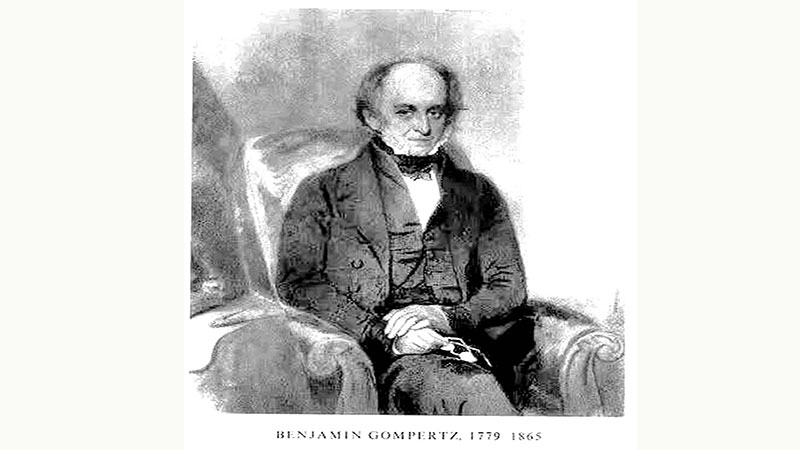


Zev Wolf ben Shlomeh Emrich, better known as Benjamin Gompertz (1779-1865), was born in London into a Sephardic Jewish family belonging to the Spanish and Portuguese Jewish community, the oldest continuous Jewish community in England, and his life spanned a period of profound transition for British Jewry, marked by gradual emancipation, economic integration, and persistent legal and social barriers. He emerged during this period as one of the most original mathematical thinkers in Britain, yet his intellectual career was shaped decisively by his status as a Jew in a society that restricted access to education, professional advancement, and civic participation on religious grounds. His enduring fame rests on a single, extraordinarily influential contribution to science – the formulation of the mathematical law governing adult human mortality – but his broader life and work are inseparable from his Jewish ancestry, communal affiliations, family life, and the civil disabilities under which he lived.
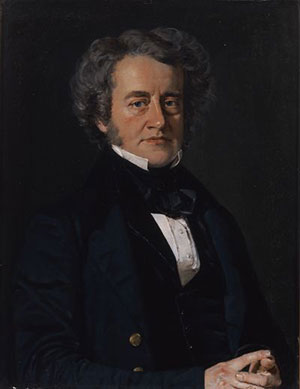
Gompertz’s family belonged to the long-established Sephardic elite of Anglo-Jewry, descendants of Jews who had resettled in England following the readmission of Jews under Oliver Cromwell in the mid-seventeenth century. The Spanish and Portuguese Jews of London maintained distinctive liturgical rites, communal institutions, and social networks centered on the synagogue at Bevis Marks, and this congregation was not merely a place of worship but a hub of communal governance, charity, and social cohesion. His upbringing took place within this environment, which emphasized education, commercial competence, and communal responsibility, even as it operated within a society that denied Jews full civil equality.
Like most Jews of his generation, Gompertz was barred from England’s ancient universities, Oxford and Cambridge, because of mandatory Anglican religious tests, an exclusion that had lasting consequences for his intellectual development. Deprived of formal academic training, he pursued mathematics through private study and informal mentorship, drawing on books, correspondence, and engagement with learned societies. Far from hindering him, this unconventional path fostered an independence of thought that would later allow him to see patterns in demographic data that others had missed. His mathematical interests gravitated toward probability, life contingencies, and financial mathematics – fields with direct relevance to commerce, insurance, and the emerging capitalist economy.
While the late eighteenth and early nineteenth centuries witnessed rapid growth in life insurance and annuities, driven by urbanization, expanding middle classes, and increasing concern with financial security, the scientific foundations of these industries were weak. Mortality tables were often inconsistent, based on incomplete data and they lacked a coherent theoretical basis, and Gompertz entered this field with the conviction that mortality was not random chaos but was governed by an underlying mathematical law.
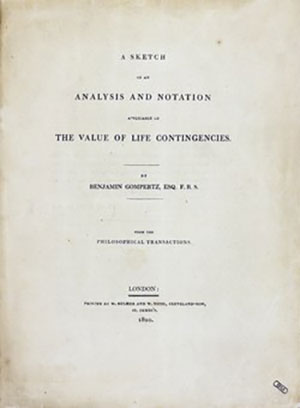
His breakthrough came with the publication in 1825 of his paper On the Nature of the Function Expressive of the Law of Human Mortality in the Philosophical Transactions of the Royal Society in which he proposed that, for adult ages, the force of mortality increases in geometric progression with age. In non-technical terms, this means that the risk of death does not simply rise by a fixed amount each year but increases by a roughly constant percentage as a person grows older; in other words, the older one becomes, the faster the mortality risk accelerates.
Gompertz conceptualized mortality as the result of a declining “vital power”; according to his theory, early in adult life the body possesses substantial resistance to death, but this resistance diminishes over time in a regular and predictable way. External threats, such as disease, environmental stress, and physical wear thus become progressively more lethal as vitality wanes. His mathematical expression of this idea produced a curve that matched observed mortality data for adults with remarkable accuracy across different populations and time periods.

Gompertz was very careful not to overstate his claims. He acknowledged that infant and childhood mortality followed different patterns and that his law applied primarily to adult life, a methodological restraint that contributed to the lasting credibility of his work. Subsequent researchers refined his model, most notably by adding an age-independent component to account for accidental or environmental deaths, producing what is now known as the Gompertz–Makeham law. Nonetheless, the core insight – that aging-related mortality increases exponentially – remains central to actuarial science, demography, gerontology, and even contemporary biological research into aging.
The practical implications of Gompertz’s Law were immense. It allowed insurers to calculate premiums and reserves with unprecedented precision; annuities could be priced more accurately; pensions could be funded more reliably; and long-term financial obligations could be managed with greater confidence. In effect, he transformed insurance from a speculative enterprise into a mathematically disciplined industry such that nearly two centuries later, variations of his model remain embedded in actuarial practice, a testament to the depth and durability of his insight.
Despite the importance of his work, Gompertz’s professional recognition was constrained by his outsider status. His election as a Fellow of the Royal Society in 1819 was a significant honor, particularly for a Jew at that time, but it did not erase the structural disadvantages he faced: he never held a university post, nor did he enjoy the patronage networks that propelled many of his contemporaries. Antisemitism in early nineteenth-century Britain was often expressed not through overt hostility but through exclusion and quietly enforced barriers that limited opportunity and visibility.
Gompertz’s Jewish identity remained central to his life. He maintained active ties to the Spanish and Portuguese Jewish congregation, which provided not only religious continuity but also social and professional connections. The Sephardic community in London included merchants, financiers, and intellectuals who supported one another in navigating a society that regarded Jews as perpetual outsiders and, within this milieu, he encountered individuals who would play crucial roles in his personal and professional life.
In 1810, Gompertz married Abigail Montefiore, a member of the same Sephardic community and the sister of the beloved Moses Montefiore, a marriage that bound him to one of the most influential Jewish families in Britain. Abigail was raised within the traditions of the Spanish and Portuguese Jews and, while private religious observance is difficult to document in detail, there is no evidence that the household departed from normative Jewish communal practice. Their family life was embedded in a network that observed Jewish festivals, life-cycle rituals, and communal obligations.
Moses Montefiore’s influence on Gompertz was substantial. He was a financier, philanthropist, and eventually the most prominent Jewish communal leader in nineteenth-century Britain, and, through him, Gompertz was connected to international Jewish concerns, including efforts to defend Jewish rights abroad and to improve Jewish welfare in the Land of Israel. Although Gompertz himself did not emerge as a public activist on the scale of Montefiore, his proximity to such initiatives shaped his understanding of Jewish responsibility and solidarity.
Another key relationship was with Nathan Mayer Rothschild, the founder of the British branch of the Rothschild banking dynasty. Gompertz, Montefiore, and Rothschild shared not only business interests but a common experience as Jews operating within, and helping to shape, the financial infrastructure of modern Britain. These relationships culminated in one of Gompertz’s most significant commercial achievements, the founding of the Alliance Assurance Company in 1824.
The company, conceived as a global insurance enterprise at a time when most insurers operated on a national or regional scale, offered fire and life insurance and rapidly expanded across Europe, the Americas, and Asia, with Gompertz’s actuarial expertise central to its success. His mortality models informed the pricing of life insurance policies and contributed to the company’s reputation for financial soundness, and Alliance Assurance became one of the most important insurance companies of the nineteenth century, reflecting both commercial ambition and scientific rigor.
The founding of Alliance Assurance also carried symbolic significance: it demonstrated that Jewish financiers and intellectuals could operate at the highest levels of British economic life, even as they remained excluded from full political participation. Although Jews would not be permitted to sit in Parliament until decades later, they were instrumental in building the financial institutions that underpinned British global power.
Gompertz was also deeply involved in Jewish communal governance. He was associated with the Board of Deputies of British Jews, the representative body established to advocate for Jewish interests and civil rights and, while he was not among its most visible leaders, his participation reflected a commitment to collective self-representation. The Board played a crucial role in the long struggle for Jewish emancipation, addressing discriminatory laws and defending Jewish communities at home and abroad.
Civil disabilities shaped Gompertz’s life in subtle but persistent ways. His exclusion from universities limited his influence as a teacher and mentor, and his scientific work, though highly respected, did not translate into institutional authority. These constraints help explain why his intellectual energies were directed toward private research and commercial application rather than public academic life; nonetheless, within these limitations, he was able to achieve an influence that outlived many of his more formally credentialed contemporaries. He also fully engaged in Jewish philanthropy, supporting communal charities and institutions in accordance with Sephardic traditions of organized giving. While he did not found major philanthropic bodies, his contributions helped sustain the communal infrastructure of Anglo-Jewry during a period of demographic growth and social change.
The question of Gompertz’s views on Zionism must be addressed with historical precision and care. Political Zionism as a coherent movement emerged only in the late nineteenth century, decades after his death, and it would therefore be inaccurate to attribute to him positions associated with later Zionist ideology. However, like many Jews of his time, he lived within a religious culture that maintained spiritual and emotional ties to Eretz Yisrael. Through his close association with Montefiore, who invested heavily in Jewish settlement and welfare in Eretz Yisrael, Gompertz would have been aware of early philanthropic efforts in the region.
Gompertz and his wife raised their children within the Jewish community, ensuring continuity of identity and affiliation. Their descendants remained connected to Jewish social and professional networks, reflecting a pattern of integration without assimilation characteristic of the Sephardic elite.
In his later years, Gompertz continued to work actively as a mathematician and consultant, even as the pace of his publications slowed. His intellectual reputation by mid-century was secure among specialists, though he never achieved popular fame and, unlike many scientific figures whose work is later eclipsed, his contribution proved unusually resistant to obsolescence. As demographic data expanded and statistical techniques improved, his core insight, that adult human mortality follows an exponential trajectory, was repeatedly confirmed rather than displaced, an endurance that reflects not only mathematical elegance but also empirical robustness, a rare combination that ensured his continued relevance.
Upon his death in 1865, Gompertz was buried in a Sephardic cemetery, the Lauriston Road Jewish Cemetery (Hackmey, London), in accordance with Jewish law and his burial affirmed his lifelong identification with his community. His death marked the end of a life that bridged the worlds of traditional Jewish community and modern scientific inquiry, exclusion and influence, and marginality and centrality. Although his passing went largely unnoticed by the general public, his ideas continued to shape practices that affected millions: every life insurance policy priced with age-based risk, every actuarial table modeling longevity, and every scientific discussion of exponential mortality bears the imprint of his work.
Gompertz’s work exerted influence beyond actuarial science. In the nineteenth century, demographers and social reformers increasingly sought quantitative tools to understand public health, urbanization, and population change, and mortality statistics became essential for evaluating sanitation, medical interventions, and social policy. The Gompertz model provided a framework for interpreting these data in a coherent way, and, by identifying aging as a systematic process rather than a collection of unrelated risks, Gompertz helped shift thinking toward a more scientific understanding of human lifespan.
In the twentieth and twenty-first centuries, his ideas found new life in biology and gerontology. Researchers investigating the mechanisms of aging observed that mortality rates in many species, not only humans, exhibit Gompertzian behavior over significant portions of the lifespan, which led to debates about whether aging is governed by universal biological laws or by species-specific processes. While Gompertz himself did not speculate on biological mechanisms in modern terms, his mathematical formulation became a cornerstone for interdisciplinary inquiry into aging, survival, and longevity.
In the insurance industry, Gompertz’s legacy was institutional as well as intellectual. Alliance Assurance, the company he helped found, continued to expand long after his death, becoming a major international insurer, and its success demonstrated the commercial value of actuarial rigor and contributed to the professionalization of actuarial science. Over time, the actuarial profession developed formal examinations, standards, and bodies of knowledge, many of which rested implicitly on Gompertz’s foundational work; his influence thus extended not only through equations but through the structures of modern financial risk management.
The broader historical significance of Gompertz’s career lies in the way it illuminates the position of Jews in nineteenth-century Britain. His life exemplifies a pattern common among talented Jewish professionals of his era: exclusion from traditional elite institutions coupled with opportunity in emerging fields where ability mattered more than pedigree. Finance, insurance, and applied science offered avenues for achievement that were closed in academia, the church, and politics, and Gompertz did not merely adapt to these conditions; he helped shape the institutions that would later become central to British economic life.
Within Anglo-Jewry, Gompertz occupied a respected but understated position; he was not a charismatic leader or a public orator, nor did he seek prominence in communal politics. Instead, his contribution was quieter and more structural, and, through professional excellence, philanthropy, and institutional participation, he helped to normalize Jewish presence in spheres once dominated by Christians. His association with figures such as Montefiore and Rothschild placed him within a network that combined wealth, intellect, and communal responsibility.
Gompertz’s relationship with Montefiore deserves particular historical emphasis. While Montefiore’s well-known global activism on behalf of Jews from the Middle East to Eastern Europe made him an international symbol of Jewish advocacy, Gompertz, by contrast, worked primarily behind the scenes, contributing expertise rather than public leadership. Yet, their collaboration illustrates complementary modes of Jewish engagement: one outward-facing and diplomatic, the other analytical and institutional. Together with Nathan Mayer Rothschild, they exemplified a generation of Jews who leveraged financial and intellectual capital to secure both communal advancement and broader social integration.
The question of Jewish emancipation formed the political backdrop of Gompertz’s adult life. Throughout the first half of the nineteenth century, British Jews campaigned for the removal of civil disabilities that barred them from Parliament and other public offices, and the Board of Deputies of British Jews coordinated these efforts, petitioning Parliament and engaging with government officials. Gompertz’s association with the Board placed him within this struggle, even if he was not among its most vocal representatives, and his own career demonstrated both the possibilities and the limits of Jewish integration prior to full emancipation.
Gompertz never sought to be a symbol. Yet in retrospect, he became one – of how a Jewish life, lived with discipline, intellect, and quiet commitment, could leave an imprint far beyond its immediate circle. His story reminds us that lasting influence often arises not from public acclaim but from ideas that endure, institutions that function, and communities that remember.