 July 3, 2026
 Categories: Torah / Halacha & Hashkafa
Damaging a Parah Adumah
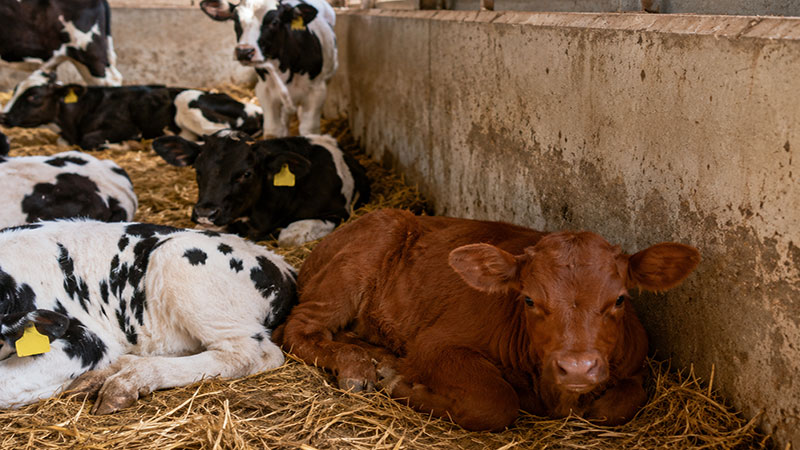


Several weeks ago, a completely red (i.e., auburn) calf was born on a milk farm in the Galil. The foreign worker attached an ear tag to the calf, following standard protocol.
A Jewish worker noticed the calf, recognizing its potential suitability as a ParahAdumah, should we be privileged to the rebuilding of the BeisHaMikdash and the restoration of taharah (ritual purity). The ear tag was removed, the blemish hole is healing, and the calf was aptly named Temimah.
* * * * *
Shai made the rounds in his barn, inspecting the newly born calves. “Looks like a good season,” he said to Thai, his foreign worker.
“Yes, a lot of cows have calved,” replied Thai. “I attached ear tags to all the newborns.”
“Hey, look at this one!” exclaimed Shai, pointing to an auburn calf lying in the corner. “It looks like a purebred Red Angus!”
“It sure stands out from the other white and black calves,” agreed Thai.
“I want to take a closer look,” said Shai. He looked over the calf and did not notice any black or white hairs.
“It’s a beauty!” announced Shai. “Some farmers have recently tried to breed a calf like this for use as a Parah Adumah when the Temple will be rebuilt, which we pray happens soon in our time.”
“I hope this one is good!” replied Thai.
A dark cloud of concern suddenly swept across Shai’s face. He immediately removed the ear tag from the red calf.
“What’s the matter?” asked Thai, worried.
“This calf alone could be worth hundreds of thousands if it’s good,” explained Shai. “But the ear tag you put on made a hole in the calf’s ear. If the hole does not heal properly, the blemish disqualifies it from use as a Parah Adumah.”
“Really?!” gasped Thai. “I hope you’re not going to hold me liable. I had no way of knowing.”
“Don’t worry,” said Shai. “You followed the regulations of the farm, discharging your duties responsibly. But I am interested in learning the halacha.”
He called Rabbi Dayan and asked:
“Is someone who blemishes a red calf liable for the potential monetary damage?”
“The Mishna (Gittin 52b) addresses halachic damage that is not physically discernible – hezek she’aino nikar – such as one who mixed prohibited yayin nesech in another’s wine,” replied Rabbi Dayan. “If done with intent to damage, the person is liable, but if done accidentally he is exempt (C.M. 385:1).”
“A hole in the cartilage of the ear, though, is not just halachic damage, but rather damage that is physically discernible, for which one can be liable even without intent to damage (C.M. 378:1).
Nonetheless, Rabah (B.K. 98a) exempts one who minimally blemishes another’s animal, since its value as a regular animal remains unaffected, and animals are generally not destined to become sacrifices.
Despite this, Rambam (Hil. Chovel U’mazik 7:11), followed by Shulchan Aruch (C.M. 386:1), rules against Rabah and obligates payment in such cases for garmi, directly caused damage. Rema, however, followed by most authorities, considers this grama, indirectly caused damage, for which one is legally exempt, but which carries a Heavenly obligation (chayav b’dinei Shamayim) when done maliciously (Shach 386:18; C.M. 418:16; Pischei Choshen, Nezikin 3:2[3], 3:18[48]).
However, Tosfos (B.K. 98a) distinguish that while regular animals are not destined for sacrifices, a red cowis destined for use as Parah Adumah, which is valuable.
Even so, this calf is not currently fit to be a Parah Adumah. It must reach at least two full years without additional blemishes, without sprouting two nearby black or white hairs, and without being worked (Hil. Parah Adumah 1:1-7).
Furthermore, we pray for the hasty coming of Mashiach but might not return to the state of purity during the usable lifetime of this calf. Thus, Shulchan Aruch omits the case of one who blemishes the ear of an animal, since nowadays we cannot offer sacrifices.
“At most,” concluded Rabbi Dayan, “the damage would be the amount that an organization (which currently exists) interested in pursuing the feasibility of Parah Adumah would pay for the calf – beyond its regular value – based on the speculation that it will remain fit when it matures and that we will merit seeing the rebuilding of the Temple speedily.”
Verdict: According to most poskim, a person who minimally blemishes an animal is not liable, since its value as a regular animal is unaffected. However, blemishing an animal fit to be a Parah Adumah can carry liability, which must be evaluated based on its potential for actual use for that purpose.