 July 3, 2026
 The Mystery of the Atarah
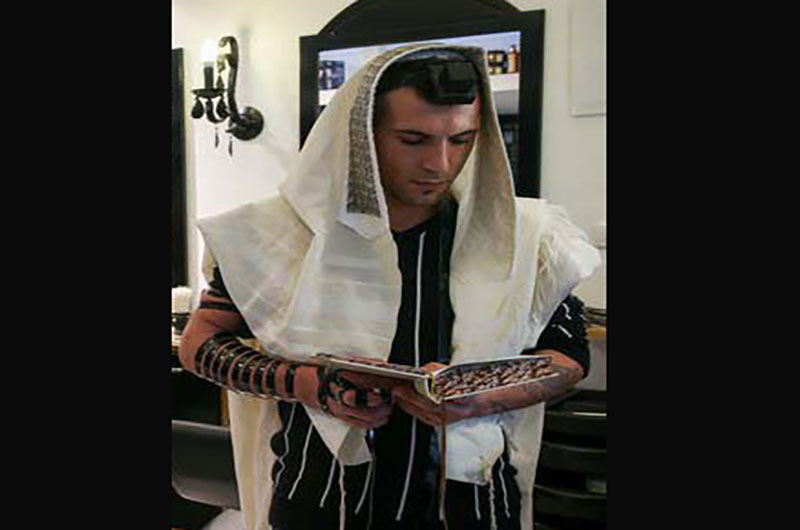


All married men wear a tallis gadol in the morning when they pray, and most people have a special and exclusive tallis they wear in honor of the Shabbos. Many people, especially among the chassidim, wear an atarah, a crown, a beautiful strip of silver on the top of the tallis. Some even place the silver atarah upon a layer of velvet as a further adornment. Yet, other very great people such as Rav Moshe Feinstein, zt”l, zy”a, and Rav Yakov Kamenetsky, zt”l, zy”a, wore a simple tallis on Shabbos without any ornamentation whatsoever.
What would be the reason to abstain from the silver atarah? After all, it says, “Zeh Kei’li v’anveihu – This is my G-d and I will glorify Him.” The Gemara elaborates, “Hisna’eh lifonov b’mitzvos – Be beautiful before Him with your mitzvos,” so, what would be a reason to choose the plain route?
First, let’s talk about the origin of the atarah on the tallis. The Magen Avraham quotes from the Shelah HaKodosh, zt”l, zy”a, that the atarah is to ensure that the side of the tallis which goes upon the head should always be used for the head. As it says, “Ma’alin b’kodesh v’ein moridin – We go up in holiness and we never descend.” He cites as a source for this the verse, “V’hakimosa es haMishkan k’mishpato – You should erect the Tabernacle properly.” Chazal explain that this is the source that all the Tabernacle’s beams were numbered to ensure that each beam that was positioned by the Holy of Holies remained so, once again, ensuring that no beam was demoted from its previous holy location. (Some people even have a custom of marking the wooden boards of their sukkah to remember which boards were used in the front for the family, ensuring that these same boards remain in that position from year to year.)
So now, it’s even more mysterious. Why would people abstain from using a beautiful atarah? The answer is in a Levush, zt”l, zy”a, who explains that the atarah makes the tallis look like an adornment of the head. If it would only be such, the article itself would be exempt from having tzitzis on the corners. For the pasuk says, “Asher tichaseh bah – Which you cover your whole body with,” and putting an atarah only on the head would be misleading. This explains the unusual custom that is seen by certain rebbes. In addition to the atarah at the head, they have another silver strip horizontally in the middle of their tallis. Many people find that very strange, but it is done to remove the issue raised by the Levush. By putting this silver strip also in the middle, the silver clearly isn’t only an adornment of the head.
This was a well-known and popular minhag in Poland and it was the minhag of the late Munkatcher Rebbe, Rabbi Chaim Elazar Spira, the Minchas Elazar, zt”l, zy”a. Yet many of the Lithuanian roshei yeshiva eschew the atarah and go with a simple plain tallis, and such was the recommendation of the Aruch HaShulchan.
Once we are speaking about the tallis, let me point out some of its powers. The Kaf HaChaim cites that properly having in mind the mitzvah of the tallis gadol is protection for one’s teeth, for there are 4 corners of 8 threads, which equal 32, the number of teeth in one’s mouth. The beracha that we make on the tallis gadol is, “L’hisateif ba’tzitzis – To wrap (oneself) in tzitzis,” whose roshei teivos, starting letters, are lammed (30) and beis (2), which also equals 32. Furthermore, Masechtas Bava Metzia (2a) starts off, “Shnai’im ochzin b’tallis – Two people who see a tallis,” but the word shnai’im could also refer to teeth, hinting that the tallis is helpful for the teeth.
The Chafetz Chaim, zt”l, zy”a, writes that one who is frustrated and feels anger coming upon them should grab onto his tzitzis, which are a segulah against anger. (HaRav Aharon Yehuda Leib Shteinman, zt”l, zy”a, whimsically says that a better segulah against anger is simply to keep one’s mouth shut!) Ben Yehoyada, zt”l, zy”a, says that on each corner of the tallis is the tzitzis, made up of 8 threads and 5 knots. This equals 13. Thirteen, times all 4 corners, equals 52 which is the gematria of ben (beis=2 and nun=50), a son. He thus says that having a nice tallis is a segulah to have a son. And that’s why it says, “V’asu lahem tzitzis al kanfei vigdeihem l’dorosom – And you should make tzitzis on the corners of your garments for generations,” hinting to the fact that the tzitzis aid families in having generations.
(I’d like to share with my dear readers that my wife, Mrs. Shoshy Weiss, LCSW-R, is, b’ezras Hashem, giving a six-week zoom course starting July 7, 2026, on “IFS for Women.” You are invited to listen to a pre-recorded message at 732.661.8280 explaining the course. To register or find out more, please call or text 845.270.3699, or check out her website at shoshyweissifstherapist.com.)
In the merit of our tzitzis, may Hashem cloak us with protection and bless us with long life, good health and everything wonderful.