 July 3, 2026
 Categories: Front Page / Features
Torah, Not Bagels, Sustains the Jewish Future
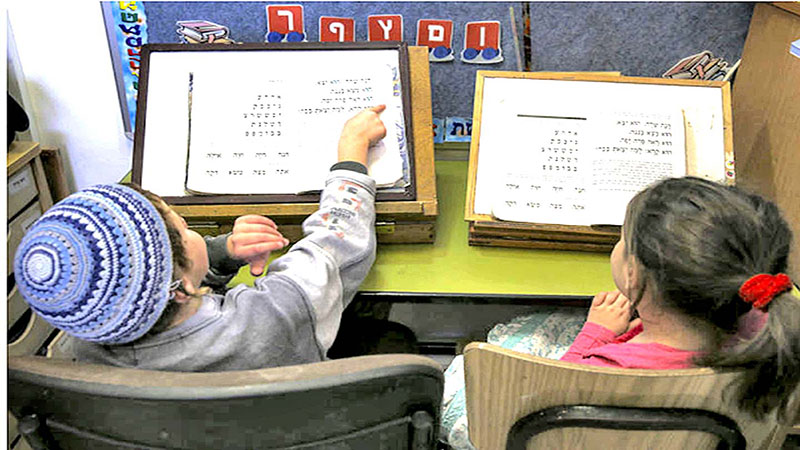


Four-year-olds don't usually make life-changing decisions for their parents.
Our daughter Alisa did.
Nearly fifty years ago, Alisa announced that she was going to a Jewish school. Roz and I smiled. We were proud Jews. We belonged to a synagogue, celebrated the holidays, and expected that, like so many American Jewish children, Alisa would attend public school.
But our four-year-old had other ideas.
Looking back, I cannot tell you exactly what inspired her. Perhaps it was a friend. Perhaps it was something she had heard. Whatever the reason, her insistence caused us to rethink our plans. We enrolled her in yeshiva, never imagining that the decision would alter not only her life but our own.
That memory came rushing back as I read about the Israeli government's welcome decision to invest hundreds of millions of shekels in strengthening Jewish education in the Diaspora. As president of the Religious Zionists of America–Mizrachi, I applaud the initiative. Jewish continuity is a shared responsibility, and Israel has every reason to help ensure that Jewish life flourishes wherever Jews live.
But the announcement raises a question that deserves just as much attention as the amount of money being invested.
What do we mean by Jewish education?
Is it teaching Jewish history?
Is it exposing children to Jewish culture?
Is it strengthening their connection to Israel?
Is it preserving Jewish identity?
Or is it something even deeper?
The answer, I believe, is all of those things. But they are not all the same.
There is nothing wrong with teaching children to appreciate Jewish music, literature, food, or history. There is value in learning Hebrew, celebrating our holidays, and developing a love for Israel. Every one of those experiences helps build Jewish identity.
But Jewish education cannot stop there.
Bagels and lox can remind us where we came from.
Torah teaches us who we are.
Torah gives meaning to Jewish history. It explains why the Land of Israel is more than a place on a map. It transforms holidays from cherished family traditions into sacred encounters with G-d and with our past. It reminds us that Judaism is not merely an ethnicity or a culture but a covenant stretching back to Sinai.
Our connection to Israel is strengthened because Torah teaches that this is the land promised to the Jewish people. Our sense of responsibility toward fellow Jews is deepened because Torah commands us to care for one another. Torah gives purpose to Jewish life and substance to Jewish identity.
Without that foundation, Jewish education risks becoming little more than cultural preservation.
Alisa did not simply attend a Jewish school.
She brought Torah home.
She didn't lecture Roz and me. She didn't argue theology around the dinner table. She simply lived what she was learning. Gradually, almost imperceptibly, our conversations changed. Our priorities changed. Our understanding of what it meant to be a Jewish family changed.
Our daughter became our teacher.
Long before the world came to know Alisa because of the terrorist attack that took her life, she had already transformed the lives of those who loved her most.
That, to me, is the true measure of Jewish education.
Its success cannot be measured only by enrollment figures, standardized tests, or graduation rates. Its success is measured by whether children grow into adults who build Jewish homes, raise Jewish families, cherish Torah, love Israel, and inspire others to do the same.
The effects of authentic Jewish education rarely end with the child sitting in the classroom. They reach parents, siblings, grandchildren, and generations yet unborn.
One child can change a family.
One family can strengthen a community.
One generation can secure the future of the Jewish people.
Israel's investment in Jewish education is an investment in that future, and for that it deserves our gratitude. But as communities decide how those funds will be used, we should ask not only how many Jewish children will be educated, but what kind of Jews we hope they will become.
Nearly fifty years later, I still marvel that a four-year-old girl redirected the course of her family's life simply by asking to attend a Jewish school.
That is the power of authentic Jewish education.
It doesn't merely teach children.
It teaches generations.