


Making Up for Lost Time
That life gave them all the time in the world to study the Torah free from the worries of a livelihood. Now, however, they were about to enter the real world, where the physical and spiritual juggle and compete for space.

Test Yourself: Who Is Telling You the Story?
Our Sages ask us to note that most of the time during our journey through the desert, the problem is not an external enemy but our internal state: our unity, our faith, our motivation. When these are absent, it is impossible to keep moving forward.
Beha’alot’cha: When Leadership Leans Toward the Center
The Menorah teaches that outward illumination is the last step, not the first. That leadership begins with the quiet work of tending your own inner flame.

The Faith to Keep Walking
We are all living through a period of profound uncertainty, both globally and within the Jewish world. On a global level, it often feels as if we are living in the calm before a storm.
The Two Trumpets
In this week’s parsha, we receive the command to raise up its candles, and of course on Shabbat Chanukah we are very involved with the mitzvah of lighting candles.

Using Our Heads in Shul
The study of Pirkei Avos contains lesson after lesson on how we can improve our daily behavior.

A Lesson in Humility
It is explained that before we received the Torah, we were comparable to animals, so we bring the offering from barley.
Parshas Beha’aloscha: Bringing Kedusha Home
When complaints become constant, there is usually something deeper taking place. The words people use are not always the whole story. Sometimes the frustration we hear is only the outer layer of a more painful sense of loss.

Making Peace
f you just stated the details of the korban once, with Nachshon ben Aminadav, and then said that the others brought the exact same korban (without listing the elements), this could arouse jealousy between the tribes.

Parshas Naso: The Torah’s Architecture of Repair
It begins with counting. Order. Structure. Arrangement. But almost immediately the parsha shifts into the unpredictable terrain of human emotion.
What Can We Take Away from Shavuot?
On Shavuot it is customary to make a new commitment to Torah study. Our Sages explain that Shavuot is considered a “Rosh Hashanah” for the Torah, and that a new year of Torah study is about to begin.

Neither Indulgence Nor Withdrawal
Does Hashem desire that we sever ourselves entirely from the physical world, surviving on as little pleasure and comfort as possible? According to the Rambam, the answer is no. The Torah demands calibration rather than withdrawal.

Manifesting the Priestly Blessing
The Aish Kodesh explains that in this world, a Jew can be identified by virtue of his rootedness in the supernal wisdom, but all the wisdom that reaches his consciousness comes through an extension of the Divine spirit into this material world.
The Great Treasure of Pirkei Avos
When we follow their advice and pay attention to their criticism, they actually give us life in the World to Come.
Let There Be Peace
When we fulfill the mitzvah of hachnosas orchim it doesn’t make a difference who the guests are. The halacha is to treat them like royalty.
Out of Sync Readings & Ritual Repercussions
Parshiyot come in two flavors: p’tuchot and s’tumot, open and closed. A parsha p’tucha begins on its own line, with a blank space on the line above from the end of the previous parsha to the end of the line. A parsha s’tuma begins after a blank space on the same line on which the previous parsha ended.
Charity is a Good Investment
It is not fear of having to account for one’s misdeeds after one dies that should be the motivating factor. It is the love of life that should inspire him, the love that is generated by keeping the daily mitzvos and learning His Torah.
Daily
The Torah begins with the most universal and global message: G-d created the world. But it ends with the most Jewish, national, and personal story: that same G-d, who gave King Cyrus dominion over all the kingdoms of the world, wants one House in Jerusalem, and wants us, with G-d’s help, to go up there.
Standing Still at Sinai: A Journey of Choice
Ruth’s story is not about conversion as a moment. It is about covenant as a life. Her geirus is not described as a ceremony. It is described as a relationship.

He Spoke All These Words
Of course, we know without a doubt that Hashem is One and His Name is One – and thus there is no question as to who spoke to Israel from out of the flame (ibid. 4:12) – but there is a question as to the mechanism by which the message was communicated and how it was experienced by all of us at Har Sinai.
A Thirst for Torah
Eliezer got up to speak and his shiur was so sublime and uplifting that angels descended from Heaven to listen to the incredible insights that Eliezer expounded.
The Historic Declaration of Na’aseh v’Nishmah
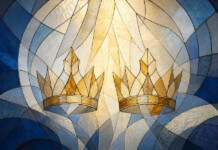
The obvious question is that our commitment seems to be in the wrong order. Wouldn’t it be more sensible to say Nishmah v’Na’aseh, first saying “Let me hear,” after which I could then responsibly say, “I’ll be able to do it.”

A Moment of Inspiration
What benefit was there then to all the miracles of Matan Torah, if everything returned shortly to the way it had been?
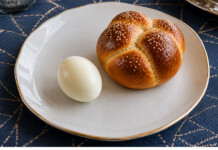
Two-Day Technicalities & ET (the Halachic Kind)
The point is that an Eiruv (any of the three kinds) cannot and does not permit something that is forbidden by Torah Law. It redefines a situation so that which was technically forbidden turns out not to be forbidden.
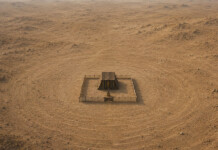
Bamidbar and the First Map
The midbar is often imagined as a place of danger and emptiness. The Torah presents it differently. The wilderness is not chaos. It is unwritten space.

The Half Full Glass
It is this choice that everyone has between faith and cynicism, between optimism and pessimism that the opening words “in the wilderness of Sinai in the Tent of Meeting” address.
And You Lifted Us Up
If we could teach ourselves to stop feeling as if we’re waiting for our “real life” to begin, but focus, instead, on what is happening here and now, not only will we, with G-d’s help, eventually reach our destination, but we will also benefit from all the gifts that await us along the way.
Cracked Skulls
If the census was a labor of love, the term Beka Lagulgolet seems incongruous. A Beka also means a crack, a rift. How does HaKadosh Baruch Hu count Am Yisrael? By counting how many "cracks in the skull" they had?! It just doesn't seem fitting.
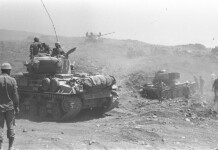
Yerushalayim – A City the World Cannot Ignore
Religious perfection requires transcendence, an encounter with the Ribbono Shel Olam, a presence that does not conform to human categories.

Acquiring Torah (On the Hilulah of Ramchal, a week after Rashbi)
The mitzvot are acts that we perform to refine ourselves and achieve our own potential, while the true object of our mental striving is to understand the acts that He performs and in what ways His greatness is made manifest.