web analytics
May 24, 2013 /15 Sivan, 5773
At a Glance
InDepth
Sponsored Post
The Tosfos Yomtov was convinced that the death of 300,000 –600,000 Jews during the Chmielnicki massacres of 1648-49 were because of improper Tefila. Communicated: Tefilla

Chillul Tefila Bifarhesia, as well as halachicly challenged verbiage and dress, are external manifestations of a critical lack of personal yiras shomayim which has lethal consequences.


Home » InDepth » Op-Eds »

Talking Turkey, the Country

Freed of the military's oversight only in mid-2011, Erdoğan could win enough dictatorial power for him (or a successor) to achieve his dream and fully implement the Shari'a.

tell a friend
Turkish Prime Minister Recep Tayyip Erdoğan

Turkish Prime Minister Recep Tayyip Erdoğan
Photo Credit: EPA

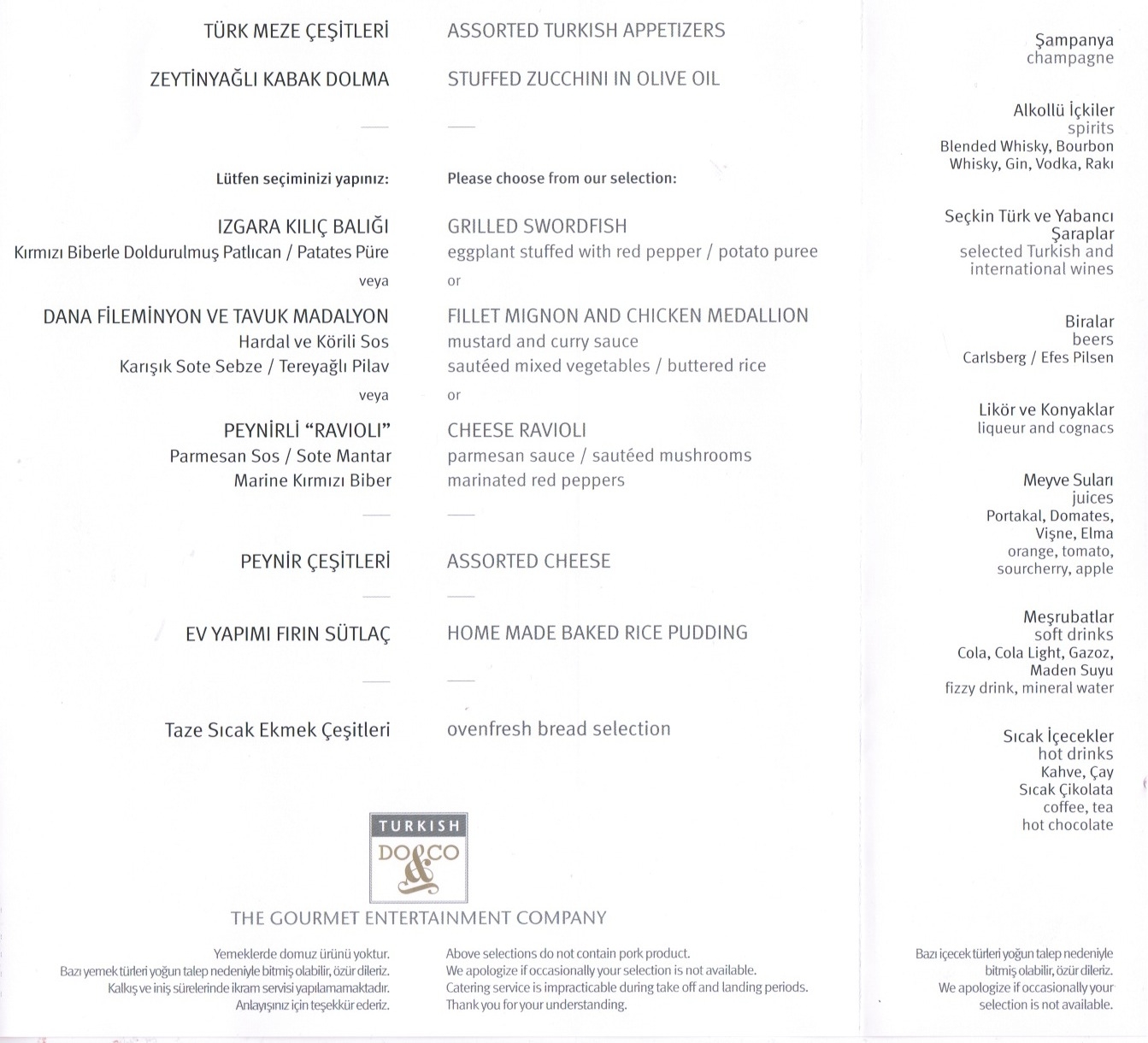
The menu for meals on my Turkish Airlines flight earlier this month assured passengers that food selections “do not contain pork.” The menu also offered a serious selection of alcoholic drinks, including champagne, whiskey, gin, vodka, rakı, wine, beer, liqueur, and cognac. This oddity of simultaneously adhering to and ignoring Islamic law, the Shari’a, symbolizes the uniquely complex public role of Islam in today’s Turkey, as well as the challenge of understanding the Justice and Development Party (known by its Turkish abbreviation, AKP) which has dominated the country’s national government since 2002.
Political discussions about Turkey tend to dwell on whether the AKP is Islamist or not: In 2007, for example, I asked “what are the AKP leadership’s intentions? Did it … retain a secret Islamist program and simply learn to disguise its Islamist goals? Or did it actually give up on those goals and accept secularism?”

During recent discussions in Istanbul, I learned that Turks of many viewpoints have reached a consensus about Prime Minister Recep Tayyip Erdoğan: they worry less about his Islamic aspirations than his nationalist and dictatorial tendencies.

Applying the Shari’a in full, they say, is not a feasible goal in Turkey because of the country’s secular and democratic nature, something distinguishing it from other Muslim-majority countries (except Albania, Kosovo, and Kyrgyzia). Accepting this reality, the AKP wins ever-greater electoral support by softly coercing the population to be more virtuous, traditional, pious, religious, conservative, and moral. Thus, it encourages fasting during Ramadan and female modesty, discourages alcohol consumption, attempted tocriminalize adultery, indicted an anti-Islamist artist, increased the number of religious schools, added Islam to the public school curriculum, and introduced questions about Islam to university entrance exams. Put in terms of Turkish Airlines, pork is already gone and it’s a matter of time until the alcohol also disappears.

Islamic practice, not Islamic law, is the goal, my interlocutors told me. Hand chopping, burqas, slavery, and jihad are not in the picture, and all the less so after the past decade’s economic growth which empowered an Islamically-oriented middle class that rejects Saudi-style Islam. An opposition leader noted that five districts of Istanbul “look like Afghanistan,” but these are the exception. I heard that the AKP seeks to reverse the anti-religiousness of Atatürk’s state without undermining that state, aspiring to create a post-Atatürk order more than an anti-Atatürk order. It seeks, for example, to dominate the existing legal system rather than create an Islamic one. The columnist Mustafa Akyol even holds the AKP is not trying to abolish secularism but that it “argues for a more liberal interpretation of secularism.” The AKP, they say, emulates the 623-year-old Ottoman state Atatürk terminated in 1922, admiring both its Islamic orientation and its dominance of the Balkans and the Middle East.

This neo-Ottoman orientation can be seen in the prime minister’s aspiration to serve as informal caliph, by his change in emphasis from Europe to the Middle East (where he is an unlikely hero of the Arab street), and his offering the AKP’s political and economic formula to other Muslim countries, notably Egypt. (Erdoğan staunchly argued for secularism during a visit there, to the Muslim Brotherhood’s dismay, and looks askance at Mohamed Morsi’s ramming Shari’a down Egyptians’ throats.) In addition, Ankara helps the Iranian regime avoid sanctions, sponsors the Sunni opposition against Syria’s Bashar al-Assad, picked a noisy, gratuitous fight with Israel, threatened Cyprus over its underwater gas finds, and even intervened in the trial of a Bangladeshi Islamist leader.

Having outmaneuvered the “deep state,” especially the military officer corps, in mid-2011, the AKP adopted an increasingly authoritarian cast, to the point that many Turks fear dictatorship more than Islamization. They watch as an Erdoğan, “intoxicated with power,” imprisons opponents on the basis of conspiracy theories and wiretaps, stages show trials, threatens to suppress a costume television soap opera, seeks to impose his personal tastes on the country, fosters antisemitism, suppresses political criticism, justifies forceful measures against students protesting him, manipulates media companies, leans on the judiciary, and blasts the concept of separation of powers. Columnist Burak Bekdil ridicules him as “Turkey’s elected chief social engineer.” More darkly, others see him becoming Turkey’s answer to Vladimir Putin, an arrogant semi-democrat who remains in power for decades.

Freed of the military’s oversight only in mid-2011, I see Erdoğan possibly winning enough dictatorial power for him (or a successor) to achieve his dream and fully implement the Shari’a.

Originally published at the National Review Online on December 26, 2012 and available on Daniel Pipes.org under the title, “Talking Turkey.”

tell a friend

About the Author: Daniel Pipes is a world-renowned Middle East and Islam expert. He is President of the Middle East Forum. His articles appear in many newspapers. He received his A.B. (1971) and Ph.D. (1978) from Harvard University and has taught at Harvard, Pepperdine, the U.S. Naval War College, and the University of Chicago. He is a board member of the U.S. Institute of Peace and other institutions. His website is DanielPipes.org.


You might also be interested in:


no comments

You must log in to post a comment.

SocialTwist Tell-a-Friend

Current Top Story
Anthony Weiner courting voters outside a Harlem subway station.
Harlem Voters Remain Calm Facing Hurricane Anthony
Latest Indepth Stories
Al-Dura_Postage_Stamp

France 2 and Enderlin must have their press accreditation revoked and be thrown out of Israel.

Palestinian kindergarten children enacting a military operation.

Slaughter is a routine, widespread practice among many Moslem families.

Palestinian Authority leader Mahmoud Abbas has said he will never recognize a Jewish state and there will be no Jews allowed in a Palestinian State.

parently an affront to J Street’s worldview, the focus of which appears to be the creation of a Palestinian State, whether or not that will bring peace.

Member of Knesset Moshe Feiglin (Likud).

The importance of the caucus on organ harvesting in China, sponsored recently by the Liberal Lobby in the Knesset, cannot be exaggerated.

My mother, the eldest daughter of Reb Yaakov Kamenetsky, zt”l, was niftar last month at the age of 92. She took her last breath in her home in Efrat, Israel, next door to the shul that was my father’s for 24 years before his passing in 2007.

Following the Boston Marathon bombing, one crucial point will likely remain overlooked. The most loathsome aspect of this or any other terror bombing attack on civilians will always lie in the inexpressibility of physical pain. While all decent people will abhor the idea of bombs expressly directed at the innocent, whether here or in other countries, none will ever be able to process the very deepest horrors of what has been inflicted.

It’s only natural to see increasing evidence of Jerusalem’s glorious Jewish past being unearthed, quite literally, under modern Israeli sovereignty. The new archaeological finds are also very timely – as the Arab onslaught attempting to detach Jerusalem from its Jewish roots gains steam, the facts on the ground, or “under” the ground, show quite otherwise.

The Talmud (Berachot 26b) says, “tefillot avot tiknum” – “prayer was established by the avot.” The Talmud then uses the following verse (Bereshit 19:27) to prove how Avraham established prayer: “Vayaskem Avraham baboker el hamakom asher amad sham et pnei Hashem” – “And Avraham got up early in the morning to the place where he had stood before God.”

Nearly 13 years ago, then-Israeli Prime Minister Ehud Barak journeyed to Camp David to end the conflict with the Palestinians. With the approval of President Clinton, he offered Yasir Arafat an independent Palestinian state in almost all of the West Bank, Gaza and in part of Jerusalem. Arafat said no.

The news that the Internal Revenue Service unfairly targeted conservative groups has brought renewed spotlight on a 2010 lawsuit filed by the pro-Israel group Z Street, which alleges it was also singled out by the IRS when applying for tax-exempt status.

In an editorial last week (“Circling the Wagons”) we noted the efforts by the administration and its supporters to dismiss allegations that the government’s spin on the Benghazi attack was designed to shield the president and that the IRS was improperly used to stifle opposition to Mr. Obama’s reelection.

As the controversies besetting the Obama administration continue to grow in number and intensity, the prospect that President Obama would seriously consider military action against Iran, should that country continue its drive to become a nuclear power, becomes more and more remote. So we welcome the current enhancement of sanctions against Iran on the federal and New York State levels.

To his parents’ friends, he was “Mrs. Greenberg’s disgrace,” but to sports fans he is one of the greatest – if not the greatest – Jewish baseball players of all time. Long before Sandy Koufax, Hank Greenberg excited Jewish sports fans with his prowess on the baseball diamond.

More Articles from Daniel Pipes
Eid al-Adha celebrated in Moscow

Islamism represents the transformation of Islamic faith into a political ideology.

Syrian rebels at a training session near Idlib, in the north-west.

If Assad is winning, Western governments should respond by helping the rebels to prevent Assad from crushing them.

Muslims make up 30 out of 31 most wanted terrorists, or about 97 percent of them.

Unfortunately, we who live in democracies learn best about Islamism when blood flows in the streets.

Sometimes one is better off when an opponent feels compelled to prove his bona fides.

One must expect future non-suicide bombers to turn to niqabs or burqas, as many terrorists and criminals have repeatedly done.

Though my suggestion to now back Assad to prevent Jihadi takeover and allow both sides to fight themselves to exhaustion was rejected, it seems now the administration is taking note of my counsel.

On the happy day when Assad & Tehran fight the rebels & Ankara to mutual exhaustion, Western support then can go to non-Baathist and non-Islamist elements in Syria.

    Latest Poll

    Which is the most beautiful location in Jerusalem?


    View Results

    Loading ... Loading ...

Printed from: http://www.jewishpress.com/indepth/opinions/talking-turkey-the-country/2013/01/02/

Scan this QR code to visit this page online:

Close